English
 中文简体
中文简体
 Français
 Español
Content
Pick up a fleece sweatshirt, then pick up a knitted hoodie, and the difference registers before you check a single label. One is brushed for bulk; the other is built from interlocking loops that drape, breathe and soften with age. That is why knit hoodies have moved from a craft-fair niche onto the same retail racks as premium knitwear, often at a higher price point than the fleece they replace.
For buyers, however, "knitted hoodie" is not one product. It covers two families with different machines, minimums and price structures: cut-and-sew knits such as French terry, waffle and air-layer fabrics, and fully fashioned sweater knits worked at 7 to 14 gauge. Deciding which family a style belongs to, and what weight it needs, shapes cost, lead time and perceived quality more than any other early decision. The rest of this guide follows from that distinction.
What Actually Counts as a Knitted Hoodie
A knitted hoodie is any hooded garment whose body fabric is knitted rather than woven, but production splits cleanly down the middle.
Cut-and-sew knitted hoodies start as knitted yardage such as French terry, waffle, air-layer (often labeled scuba) or heavy jersey, which is dyed, finished, cut into panels and sewn. Most retail hoodies sit here. Weights typically run from 240 GSM for transitional waffle styles up to 450 GSM for heavy fleece-back terry. Because fabric is produced before garments, this route scales efficiently and handles prints, garment washing and mixed-fabric panels well.
Fully fashioned sweater hoodies are knitted to shape on flat-bed machines, panel by panel, then linked together. A fine-gauge merino or cotton-blend version at 12 to 14 gauge reads as knitwear with a hood; chunky 5 to 7 gauge work produces the fisherman-rib and cable styles that dominate fall collections. Yarn is committed earlier in this route, so sampling takes longer, but waste falls because each panel is knitted to size.
Both routes converge on the same construction points: a hood that holds its shape, ribbed cuffs and hem, a drawcord, and either a pullover neckline or a zip.
Fabric Options Buyers Compare First
Weight and hand feel drive most hoodie decisions, so the common options are worth comparing side by side before any quote request.
| Fabric | Typical Weight | Hand Feel and Performance | Best Suited For |
|---|---|---|---|
| Cotton French terry | 280-380 GSM | Soft, breathable, loop-back or brushed inside | Everyday pullovers, printed programs |
| Waffle knit | 240-320 GSM | Textured, warm without bulk, packs light | Four-season hoodies, children's wear |
| Air-layer (scuba) | 300-400 GSM | Smooth face, stable, structured drape | Fashion hoodies and scuba-style jackets |
| Merino or wool-cotton blends | 12-14 gauge, fine knit | Fine gauge, temperature-regulating, premium drape | Sweater hoodies, full-zip styles |
| Organic cotton blends | 260-340 GSM | Soft hand, supports verified fiber claims | Basics, family and kids' programs |
Waffle knit deserves a specific mention. Its honeycomb texture traps air for warmth while staying lighter than brushed fleece, which explains why it has become a default for transitional seasons and for children's programs where one garment must cover shifting temperatures, layered over a tee in spring and under a jacket in winter.
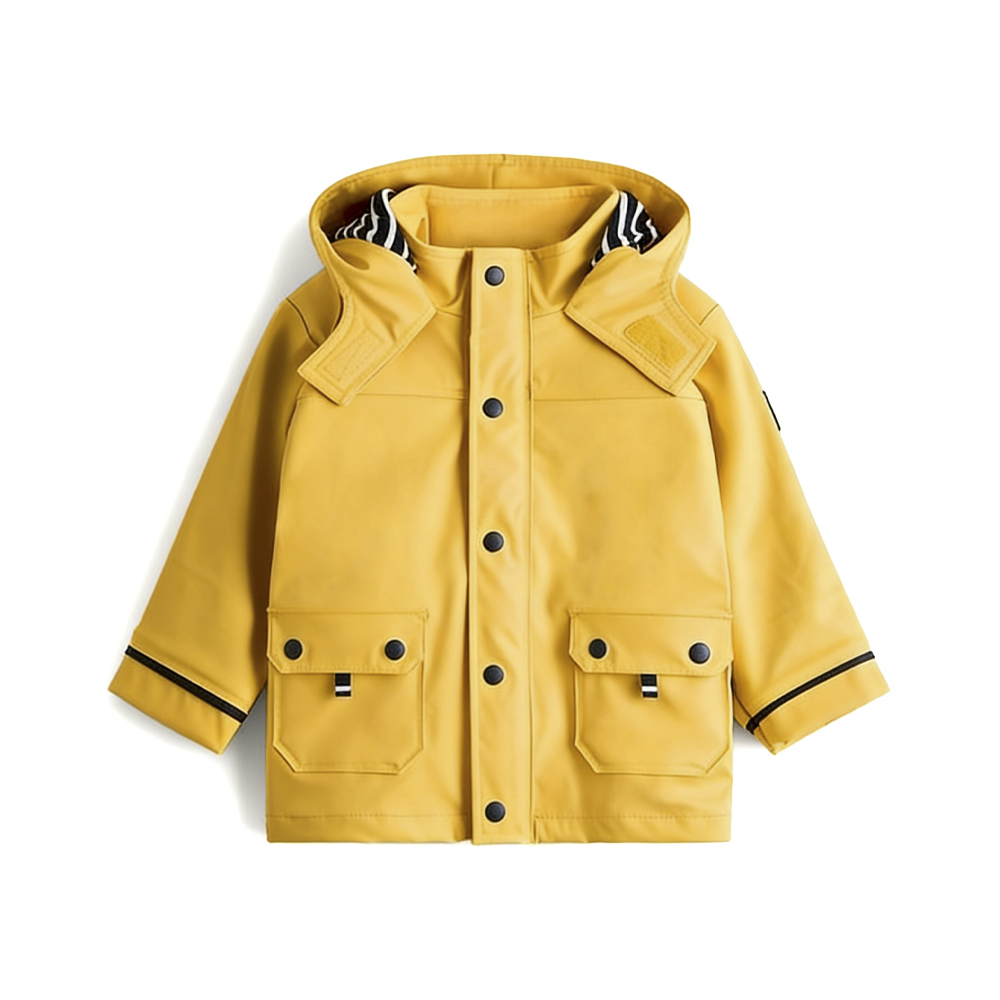
children's four-season waffle warm hooded sweatshirt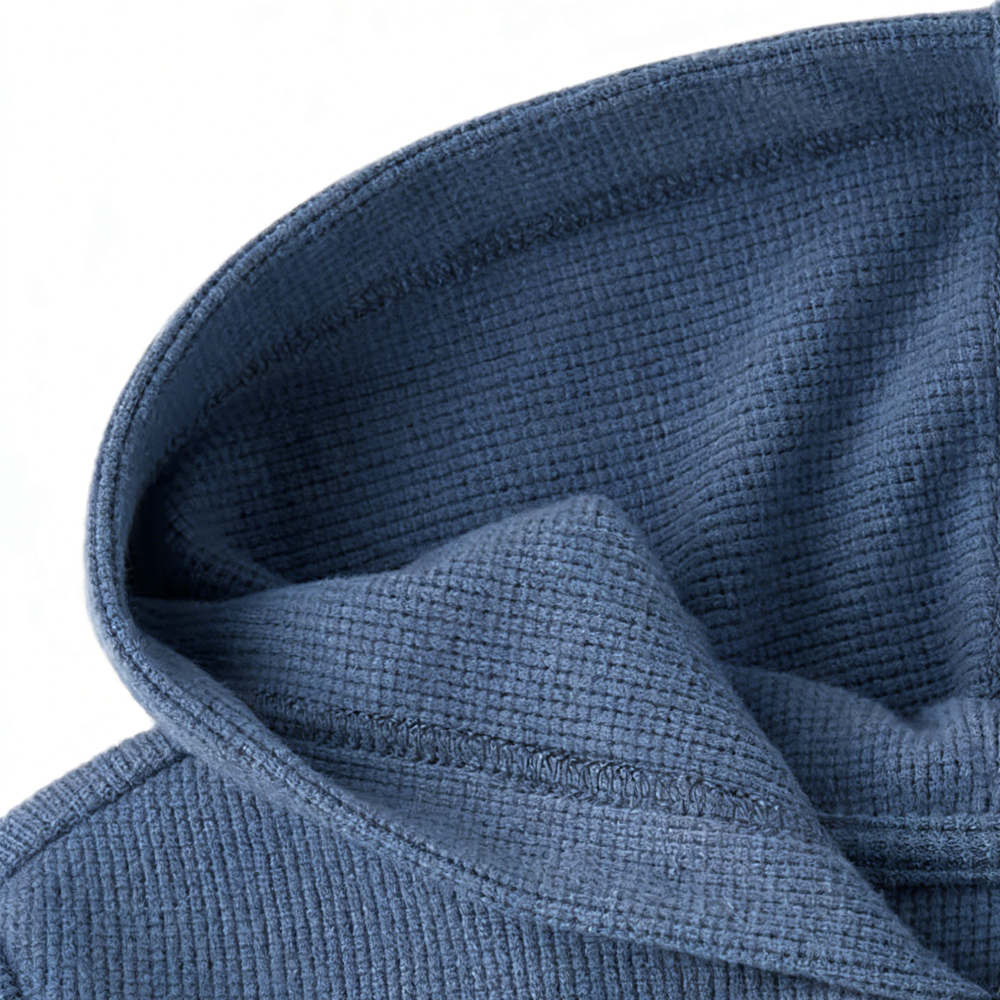 Children's Four-Season Waffle Warm Hooded SweatshirtA waffle-knit kids' hoodie in 95% polyester and 5% spandex with ribbed cuffs, hem and hood, suited to transitional weather. Following the discussion of waffle texture trapping air for warmth, it shows how one lightweight garment covers layered spring through winter wear.View Product →
Pullover, Half-Zip or Full-Zip: How Construction Changes the Garment
Style construction changes cost, QC load and how the finished garment wears in daily use.
Pullovers carry the fewest operations and the lowest unit cost, and they leave a clean front panel for embroidery or prints. Full-zip hoodies add zipper tape, a front placket and extra pocket work, which raises both cost and the number of things that can go wrong, so zipper grade and pull-cycle testing belong in the spec sheet from day one. Half-zips sit in between: a collar stand that doubles as neck protection, easier on-and-off than a pullover, and none of a full zip's placket complexity.
Garment washing changes the equation further. Washing a hoodie after assembly, with enzyme washes being the common choice, softens the hand, relaxes residual shrinkage and creates the broken-in surface consumers associate with quality. The difference is easy to demonstrate: put a raw cotton hoodie next to a garment-washing half-zip style and the washed garment simply feels better from the first wear.
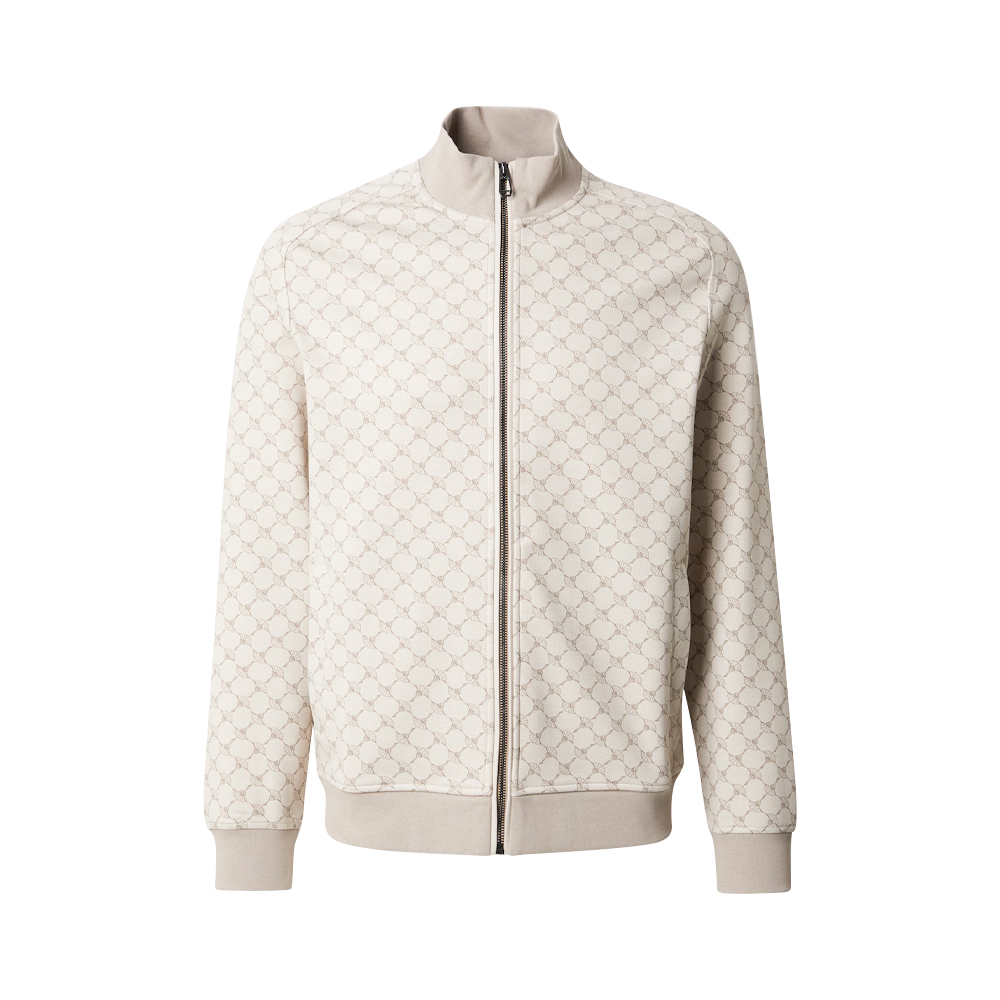
men's garment-washing half-zip hoodie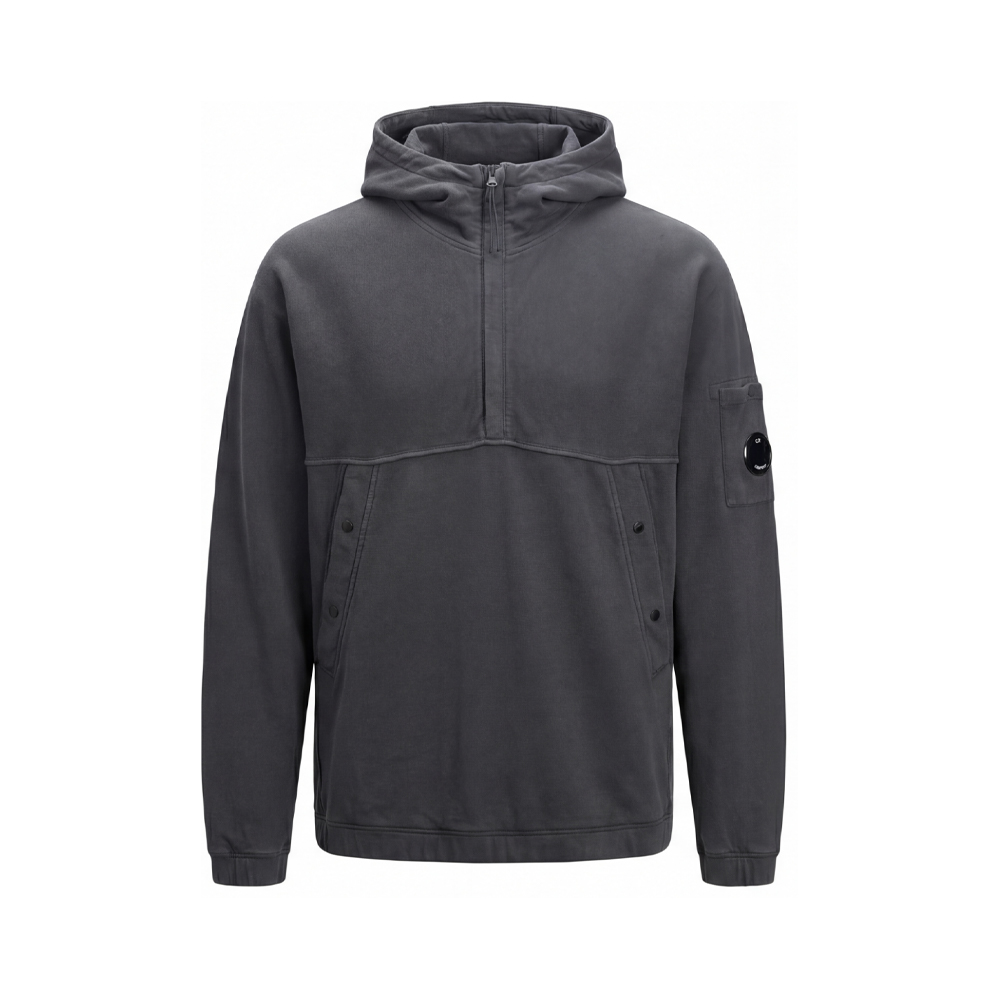 Men's Garment Washing Half Zipper Hoodie ShirtA dark grey half-zip hoodie in a cotton, rayon, recycled yarn and spandex blend, enzyme garment-washed for a soft, broken-in handfeel. It follows the washing discussion directly, illustrating how garment washing creates the quality feel consumers notice from the first wear.View Product →
The Details That Separate Premium From Basic
Specification details, not fabric alone, decide whether a hoodie reads as premium on the shelf.
- Hood: a double-layer self-fabric or lined hood keeps its shape, while single-layer hoods collapse and feel thin.
- Cuffs and hem: 2x2 rib with 3-5% spandex holds recovery after repeated washing.
- Seams: flatlock or neatly overlocked seams with tonal thread, plus bartacks at the hood seam and pocket corners.
- Drawcords: flat cords with metal or enamel tips and secure, reinforced eyelets.
- Decoration: chest embroidery sits well on terry and waffle, while large all-over prints need the stable face of air-layer fabric.
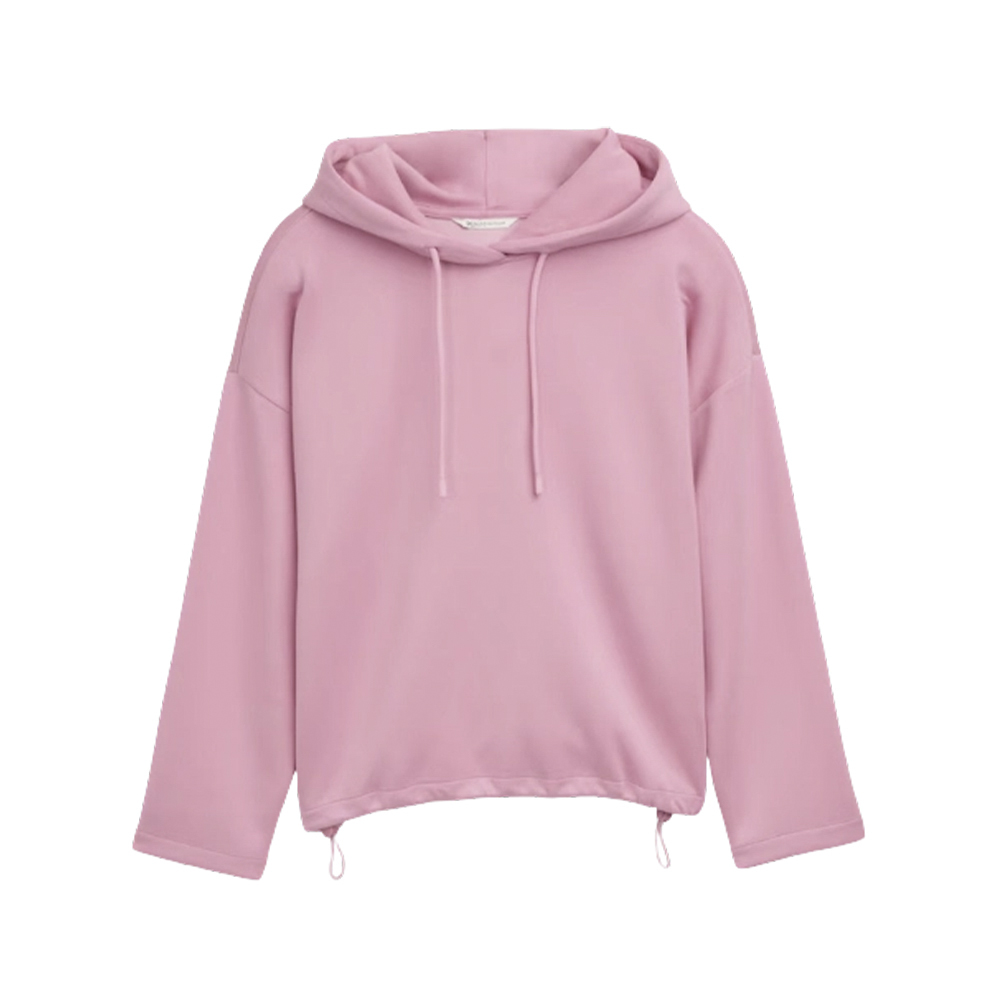
Women's fits introduce one more layer of decision. Cropped lengths, slimmer sleeves and softer palettes dominate that segment, and a women's long-sleeve hoodie in a pink-purple palette shows how little separates a basic block from a fashion piece beyond pattern work and color choice.
women's long-sleeve hoodie in a soft pink-purple palette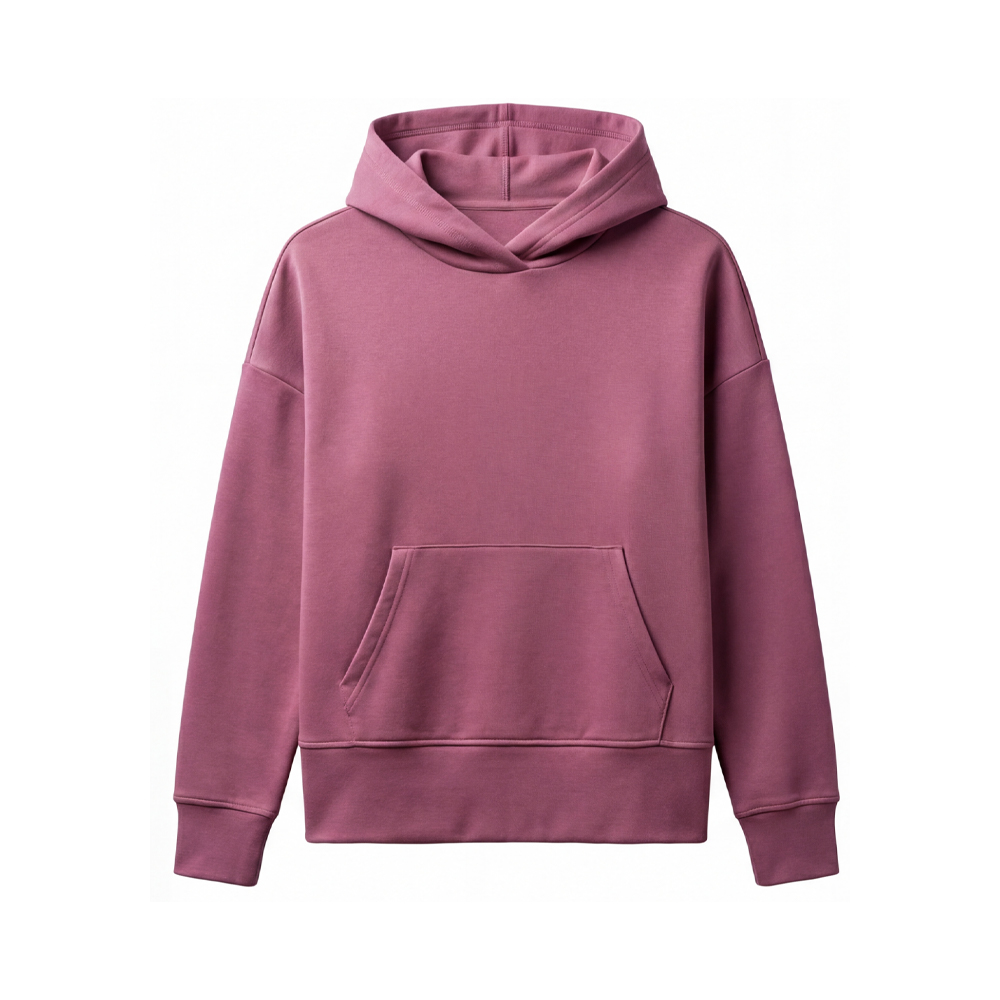 Women's Pink Purple Long Sleeve Hoodie ShirtA women's long-sleeve hoodie in a pink-purple palette with kangaroo pocket, structured hood and ribbed cuffs, offering breathable warmth for spring and fall. It demonstrates the point that only pattern work and color separate a basic block from a fashion piece.View Product →
One structural advantage matters here: when a factory runs its own embroidery, printing and garment-wash lines, sampling revisions that would take weeks of outsourcing turn around in days, and bulk decoration matches the approved sample because nothing leaves the building between processes.
What Buyers Should Verify Before Ordering
Before a purchase order goes out, these six checks catch most knitted-hoodie problems at the source:
- GSM and gauge tolerance in writing. Ask for a tolerance within 5% of the target fabric weight; anything looser invites substitution.
- Shrinkage spec. Confirm the garment stays within 3-5% after two home washes, and that garment-washed goods arrive pre-relaxed.
- Colorfastness. Request grade 4 or better on washing and rubbing tests, especially for deep and saturated shades.
- Zipper and cord testing. Pull-cycle counts and slider strength checks prevent the most common warranty returns on zip styles.
- Fiber documentation. Organic or recycled claims need transaction certificates behind them, not labels alone, and retailers increasingly audit this area as sustainability initiatives in the fashion industry face tougher scrutiny.
- A three-stage sample sequence. Proto for fit, a washed fit sample to confirm shrinkage, then a PP sample cut from bulk fabric.
Lead times follow the fabric route. Cut-and-sew programs generally run 45 to 60 days after fabric approval, while sweater-knit styles add yarn procurement on the front end, so those conversations should start one to two months earlier.
Why the Supply Chain Behind the Hoodie Matters
Knitted hoodies concentrate risk in places buyers rarely see: the knitting mill, the dye house, the wash floor. A factory that controls knitting, dyeing and finishing, embroidery, printing, garment washing and sewing within one system shortens the feedback loop at every one of those points, which is the practical logic behind how vertical integration defines a reliable leisurewear factory.
Scale matters alongside integration. Production floors running 30 hanging lines and millions of knit garments a year translate into stable scheduling for buyers who combine hoodies with adjacent categories such as sweatshirts, joggers and track jackets in the same program.
The closing advice is simple. Specify the fabric family, weight, wash treatment and construction details before comparing prices, then judge every sample after a wash rather than before. Knitted hoodies reward that discipline with garments that sell on hand feel, and that come back as reorders instead of returns.