English
 中文简体
中文简体
 Français
 Español
Content
- 1 What Standard Allowed Minutes Actually Measure
- 2 How a Factory Establishes the Number
- 3 Typical SAM Values for Common Knit Garments
- 4 What Pushes a Garment's SAM Up
- 5 Turning SAM into Capacity, Cost, and Delivery Dates
- 6 Five Questions to Ask Before You Accept a Supplier's SAM
- 7 How SAM Works on a Vertically Integrated Floor
Two factories can quote the same 180 gsm cotton crew-neck T-shirt at $2.10 and $2.45 per piece FOB, and the cheaper number is not automatically the better deal. The difference usually hides in a figure the buyer never sees: standard allowed minutes (SAM), the minute value that states how much labor one garment should consume when a trained operator works at a normal pace with proper allowances. SAM decides how a factory prices labor, balances its sewing lines, and commits to delivery dates. Put simply: if you can read SAM, you can audit a quote before you sign it. The sections below explain how the number is built, what typical values look like for common knit garments, and how to use it to test a supplier's price and capacity claims.
What Standard Allowed Minutes Actually Measure
Standard allowed minute (SAM), also called standard minute value (SMV), is the total time required to complete one garment, or one operation within it, under defined standard conditions: a specified sewing method, a trained and qualified operator, normal working effort, and agreed allowances for personal needs, fatigue, and machine delays. It is a measurement of work content, not a stopwatch guess.
The formula used across the export industry is deliberately simple:
SAM = Basic Time + Bundle Allowances (10%) + Machine and Personal Allowances (20%)
Basic time is the observed cycle time of an operation, normalized to standard performance and stripped of every allowance. If an operator completes a cycle in 0.48 minutes at standard rating, the 10% bundle allowance adds 0.048 minutes and the 20% machine and personal allowance adds 0.096 minutes, giving a SAM of 0.624 minutes for that operation. A garment-level SAM is the sum of every operation on its operation bulletin, from joining panels to attaching the neck rib, hemming, setting trims, and final checking. Two factories quoting the same style should, in theory, land on the same SAM; when they differ by more than 10 to 15 percent, someone is working from a different method, a different machine layout, or an optimistic guess.
How a Factory Establishes the Number
Synthetic data (PMTS)
Predetermined motion time systems, such as GSD, break each operation into coded body motions with pre-set time values. An engineer can build a complete SAM on paper before a single garment is sewn, which makes this the standard tool for costing at the quotation and sampling stage. The results are consistent from style to style, so buyers can compare them across suppliers.
Time study
A stopwatch study records repeated cycles of a real operator on the real line. The engineer rates the observed performance against standard pace, normalizes the readings, then adds the allowances. It reflects the actual fabric, machines, and workstation layout, but its accuracy depends on the engineer's skill and on the operator working naturally rather than pacing the job.
| Aspect | Synthetic data (PMTS) | Time study |
|---|---|---|
| Basis | Coded micro-motions with pre-set times | Stopwatch cycles observed on the line |
| Best stage | Quotation and pre-production costing | Running production and SAM updates |
| Strength | Consistent and comparable across styles | Reflects real fabric, machines, and layout |
| Main risk | Assumes a standard method and equipment | Needs a skilled engineer; pacing can distort results |
Typical SAM Values for Common Knit Garments
Buyers often ask what a normal SAM looks like. The honest answer is a range, but these are the planning ranges we work with for mid-volume knit production on hanging lines. Treat them as reference points, not constants: fabric weight, trim count, and finishing steps move the number up or down.
| Garment type | Typical SAM range | Main time drivers |
|---|---|---|
| Crew-neck T-shirt | 5-8 minutes | Few panels, neck rib attachment, sleeve and bottom hems |
| Polo shirt | 8-12 minutes | Collar and placket, buttonhole and button operations |
| Fleece or lounge pants | 12-18 minutes | Elastic waistband, drawcord, side pockets |
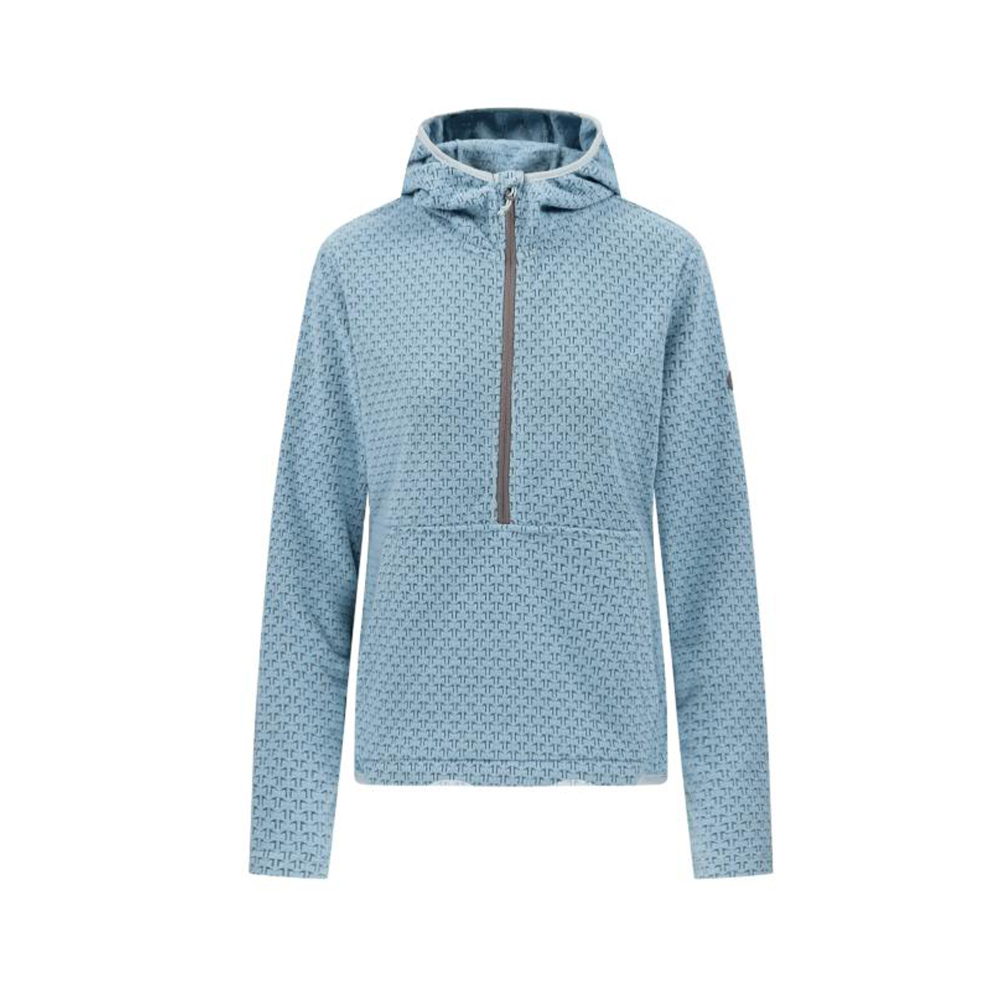
| Hoodie | 15-20 minutes | Hood, kangaroo pocket, cuffs, half-zip closure where fitted |
| Utility or outdoor jacket | 25-40+ minutes | Multiple zippers and pockets, seam taping, lining work |
The T-shirt sits at the bottom of the scale because it carries so few operations, which is exactly why it makes a useful benchmark: if a supplier's tee SAM falls far below 5 minutes, ask which operations were left out of the bulletin.
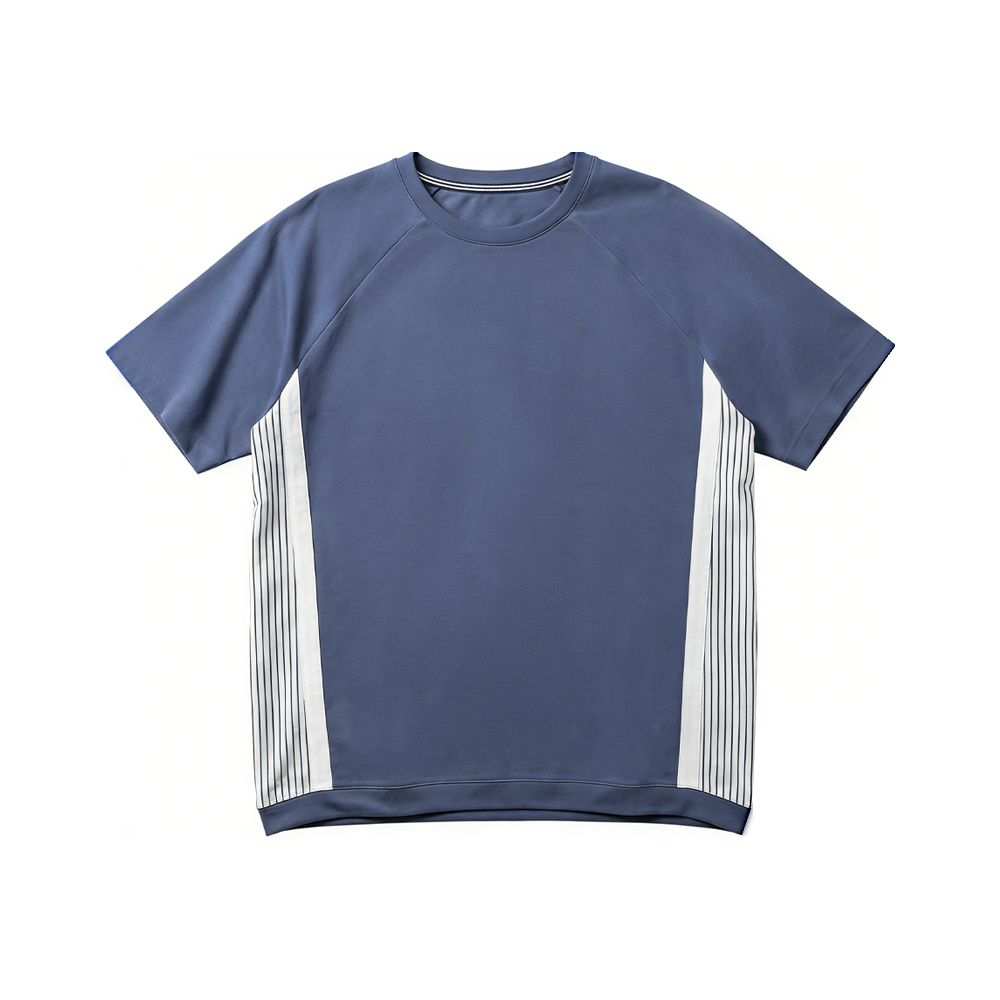 Men's Solid Print Cotton Short Sleeve Raglan T-ShirtA lightweight 100% cotton tee with pre-washing to reduce shrinkage and precise raglan-sleeve stitching. As the article's low-operation benchmark, it is worth checking how a supplier's tee SAM and stitching quality reflect what is left in or out of their production bulletin.View Product →
What Pushes a Garment's SAM Up
- Operation count: every zipper, pocket welt, cuff, and button adds measured work, and the minutes accumulate faster than buyers expect.
- Fabric handling: lightweight jersey curls at the edge, waffle and sherpa textures feed slowly, and slippery synthetic blends demand careful guiding, all of which lengthen the cycle.
- Trims and attachments: snaps, zippers, and crochet or lace trims need precise positioning, which adds handling time to each piece.
- Off-line processes: garment wash, embroidery, and printing add minutes outside the sewing line, including loading, unloading, pairing, and re-feeding pieces back into production.
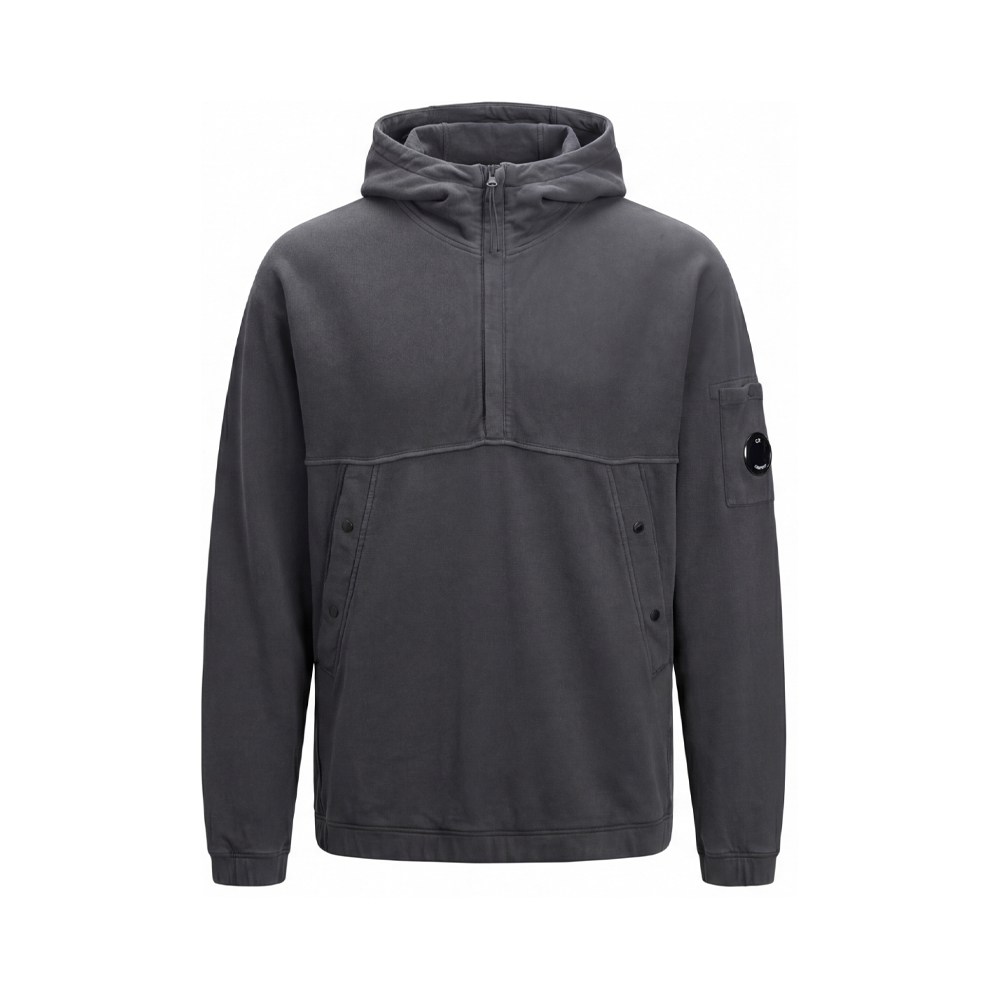
A garment-washed half-zip hoodie shows how this works in practice. The sewing itself might carry a SAM near 18 minutes, but washing adds a controlled off-line cycle with shrinkage checks and re-measurement before the pieces return to finishing. Factories that own their washing plant can schedule those minutes; factories that outsource it often cannot, and that gap shows up later as a delivery risk.
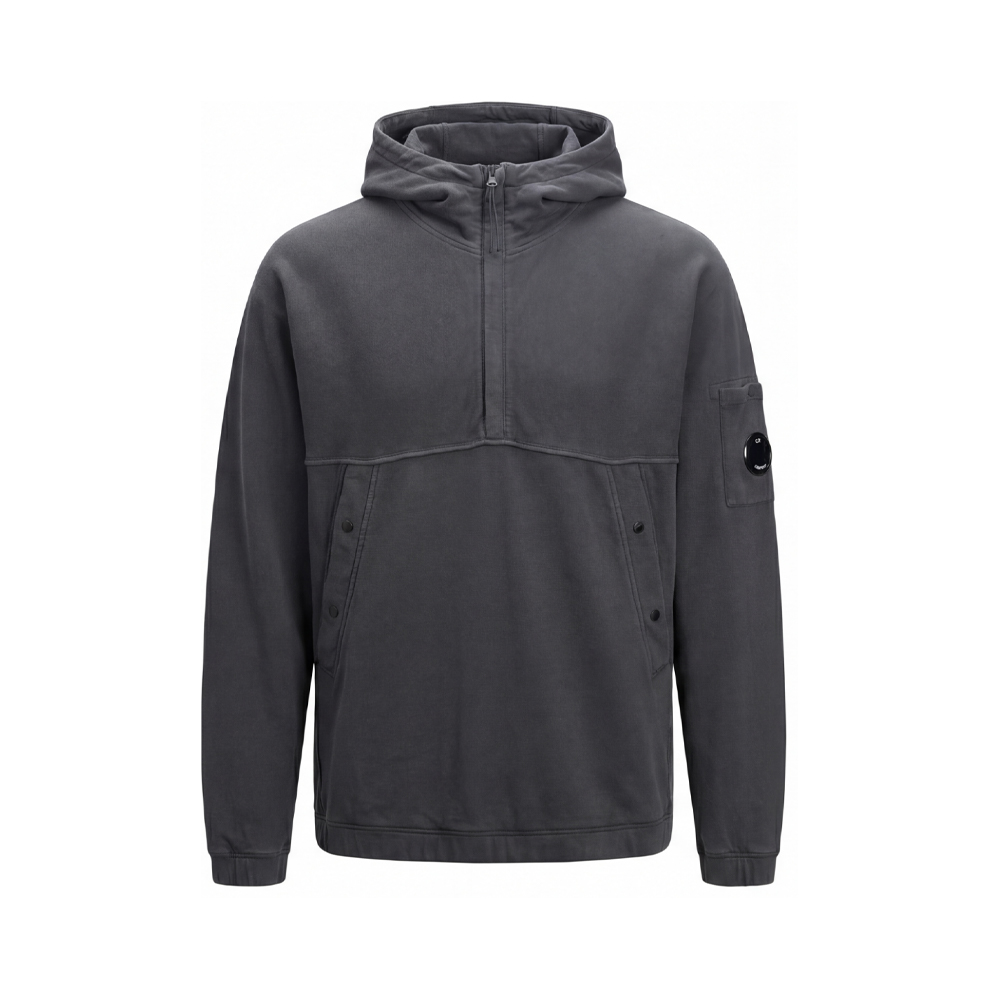 Men's Garment-Washed Half-Zip Hoodie ShirtA rayon, recycled yarn, cotton, and spandex hoodie with garment washing, half-zip front, and zippered pockets. It illustrates the article's point that washing adds an off-line cycle with shrinkage checks, so in-house washing capacity matters for scheduling and delivery reliability.View Product →
Turning SAM into Capacity, Cost, and Delivery Dates
The daily output of a sewing line follows directly from SAM: line output equals operators, multiplied by working minutes, multiplied by measured efficiency, divided by the garment's SAM. A 25-operator line working 480 minutes a day at 60% efficiency produces 7,200 earned minutes. At a 7.5-minute tee SAM that is 960 pieces a day; at an 18-minute hoodie SAM it is 400; at a 32-minute jacket SAM it drops to 225.
The same arithmetic exposes labor cost. Multiply the SAM by the factory's cost per standard minute and you have the direct labor content of the garment. Fabric dominates the cost of a basic tee, but on a heavily trimmed jacket the labor share grows quickly, which is why high-SAM styles reward factories with disciplined line balancing.
Delivery promises can be checked the same way. An order of 100,000 tees at 7 minutes represents 700,000 minutes of work; divide that by a line's daily earned minutes and you know how many lines and how many weeks the order truly needs. A supplier whose math does not support the promised ship date will discover the problem later, usually at your expense.
This is also why jacket-level styles tell you the most about a factory. An outdoor multifunction jacket with UPF100 fabric, a packaway design, and taped seams stacks dozens of operations into a single garment, and only a floor that plans its minutes carefully can deliver it on schedule.
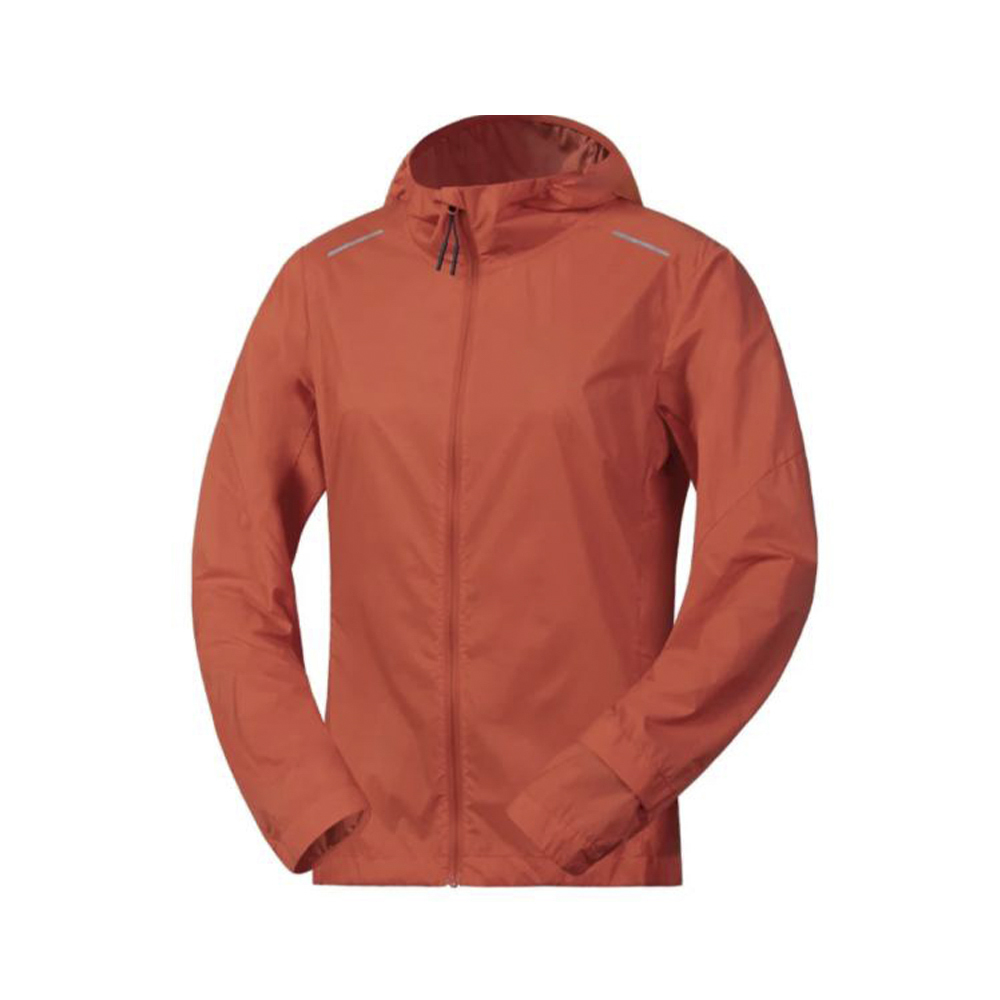 Men's Outdoor Multifunction UPF100+ Packaway JacketA 3-in-1 softshell jacket with UPF100 fabric, full zipper, packaway bag, and concealed pockets. With dozens of stacked operations per garment, it demonstrates why jacket-level styles best reveal whether a factory plans its minutes carefully enough to deliver on schedule.View Product →
Five Questions to Ask Before You Accept a Supplier's SAM
- Which method produced the number, synthetic data or a stopwatch study?
- Does the figure include the 10% bundle and 20% machine and personal allowances, or is it bare basic time?
- Can the supplier share the operation bulletin behind the SAM?
- What line-efficiency assumption sits under the quoted delivery date?
- Are washing, embroidery, and printing minutes planned inside the production schedule or handled as afterthoughts?
If a supplier cannot answer these questions, treat the SAM, and the price, capacity, and lead time built on it, as an estimate rather than a commitment. A factory that can show its work is telling you something more valuable than a low quote: it knows its own minutes.
How SAM Works on a Vertically Integrated Floor
On our own floor, 30 hanging production lines producing roughly 16 million knit garments a year, SAM is the planning currency. Hanging systems only pay off when every operation is timed and balanced, so our engineers distribute work across stations so that no position starves or floods. When knitting, fabric dyeing and finishing, embroidery, printing, and garment washing sit inside the same organization, those minutes are scheduled and visible instead of outsourced and hoped for. That is the practical meaning of vertical integration for SAM accuracy: fewer surprises between the quote you receive and the line that runs your order.
SAM is the smallest number on a tech pack and the one with the largest consequences. Before comparing two quotes, ask each supplier for three figures: the garment's SAM, the method that produced it, and the efficiency assumption behind the promised ship date. With those numbers in hand, a quote stops being a quote and becomes a checkable plan, and the factory that can show its minutes is usually the one worth your order.