English
 中文简体
 Français
 Español
Content
- 1 SAM and SMV Are One Number With Two Names
- 2 The SAM Formula, Term by Term
- 3 Operator Efficiency Is the First Number to Request
- 4 Pieces per Hour and the 60-Minute Benchmark
- 5 SAM Reference Values for Common Knit Styles
- 6 Running a Time Study That Survives an Audit
- 7 Mistakes That Quietly Inflate Capacity
- 8 What Buyers Should Do With These Numbers
- 9 Frequently Asked Questions
Three factories quote the same men's polo shirt at 11.5, 13.2 and 15 SAM. Only one of those numbers will survive contact with a bulk order.
The gap is rarely dishonesty. It is allowance, operator selection, and the distance between a sample-room garment and a bulk one. Sourcing teams that compare SAM values without opening them up tend to build capacity plans on the lowest number in the spreadsheet, then spend the next eight weeks explaining why the line is short.
This guide covers the metrics that sit on top of SAM, how each one is calculated, and what a buyer should verify before accepting a capacity commitment.
SAM and SMV Are One Number With Two Names
SAM and SMV both express the standard time a qualified operator needs to complete one defined operation at normal pace, including machine and personal allowances. Factory documentation in South Asia and the UK tends to use SMV; buyer cost sheets and audit templates tend to use SAM. The arithmetic is identical, so the terms are swapped freely in sourcing conversations, and most of the time that is harmless.
It stops being harmless when one factory builds in 18 percent allowance and another builds in 10 percent, and both values land in the same comparison sheet. The second factory has not become faster; it has simply left bundle handling and machine stoppages out of the number.
Before comparing two sites, ask for the allowance breakdown and the rating scale behind each value. A 15-minute polo and a 12-minute polo are not the same garment until you know whether trims, bundle handling and final inspection were included.
The SAM Formula, Term by Term
The working formula is SAM = observed time x rating factor x (1 + allowance). Each term is a decision, not a measurement, which is why two factories timing the same operation can still land two minutes apart.
- Observed time. The average of at least 30 clean cycles, with outliers removed rather than averaged in.
- Rating factor. How fast the selected operator works against normal pace, usually expressed between 85 and 110 percent.
- Allowance. Machine and personal time added on top, commonly 15 to 20 percent, higher in humid plants or on older equipment.
Worked through: 0.62 x 0.95 x 1.18 = 0.70 minutes per operation. Multiply by the number of operations in the garment and you have the style SAM. Our breakdown of the SAM formula and reference values shows how the same arithmetic is applied across a full operation list.
Operator Efficiency Is the First Number to Request
Operator efficiency compares the standard minutes a line earned with the minutes it was paid for. The formula is earned SAM divided by attended minutes, multiplied by 100. A line of 100 operators working a 480-minute shift has 48,000 attended minutes. If it produces 3,600 pieces at 10 SAM, it has earned 36,000 minutes and runs at 75 percent efficiency.
One number on its own tells you very little. The six metrics below are normally read together, because each one masks a different failure.
| Metric | Formula | What it reveals |
| SAM or SMV | Observed time x rating x (1 + allowance) | Standard time per operation |
| Operator efficiency | Earned minutes / attended minutes x 100 | Pace against the standard |
| Pieces per hour | (60 / SAM) x efficiency | Realistic output per operator |
| Target vs actual | Planned output / actual output | Accuracy of production planning |
| Non-productive time | Waiting + idle + rework minutes | Hidden capacity loss |
| Quality rate | First-pass pieces / inspected pieces | Rework drag on measured efficiency |
A line reporting 90 percent efficiency and a 15 percent defect rate is not outperforming a line at 78 percent with a clean first-pass rate. It is moving work backwards through the same building.
Pieces per Hour and the 60-Minute Benchmark
Pieces per hour per operator equals 60 divided by SAM, multiplied by efficiency. At 10 SAM and 80 percent efficiency, one operator produces 4.8 pieces an hour. At 100 percent efficiency the same operator would produce 6, which is why planning at full efficiency is a reliable way to miss a ship date.
Style change frequency is the usual reason a plant plans low. A line running one basic tee for three weeks can hold 85 percent. The same line switching every two days will not, no matter how experienced the operators are. When a capacity offer looks unusually generous, ask how many styles the line will run and how long each changeover takes.
SAM Reference Values for Common Knit Styles
Published operation breakdowns usually place a basic crew-neck T-shirt near 8 to 9 SAM, a men's formal shirt near 22, and a basic five-pocket trouser near 16. Treat these as reference points rather than promises. Fabric weight, stitch density, trim count and inspection standards can move a value by 20 percent or more.
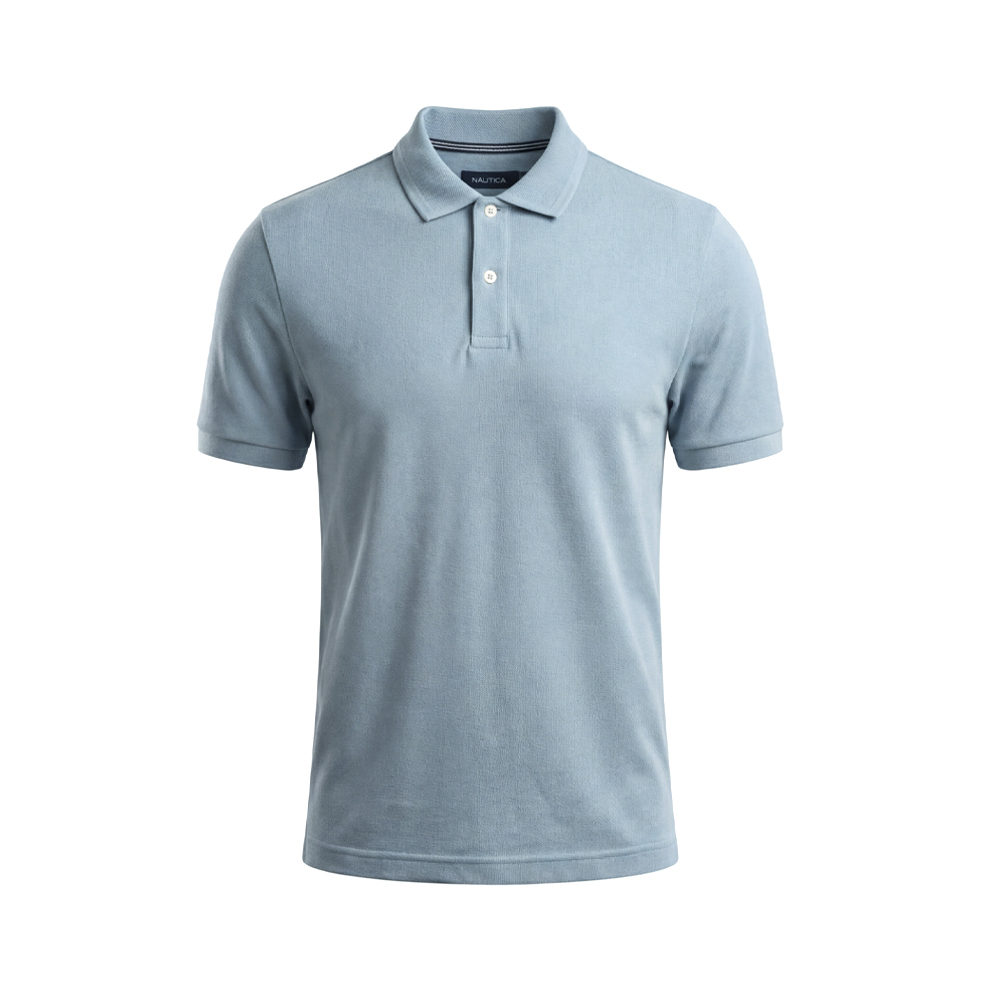 Men's Cotton Short-Sleeve Polo Shirt with Three-Button PlacketThis cotton polo adds a collar, three-button placket and side vents, making it a useful example of the extra operations beyond a basic T-shirt.View Product →
A polo is a good test case. It looks close to a tee on the sketch, but the placket, collar, buttons and side vents add operations that a plain body does not carry.
| Style | Indicative SAM | Main cost drivers |
| Basic crew-neck T-shirt | 8 to 9 | Short seams, few components, simple hem |
| Men's polo shirt | 12 to 15 | Placket, collar, buttons, side vents |
| Men's formal shirt | 21 to 23 | Collar, cuffs, buttonholes, yokes, pocket |
| Basic five-pocket trouser | 15 to 18 | Fly, waistband, pockets, belt loops |
| Cargo pant with patch pockets | 22 to 28 | Extra panels, bartacks, topstitching |
When a factory quotes a polo at 9 SAM, the useful question is not whether it is inaccurate. It is which operations were left out of the list.
Running a Time Study That Survives an Audit
A usable time study needs at least 30 clean cycles from a qualified operator working at normal pace, not the fastest person on the line. Anything less and the rating factor becomes guesswork with a stopwatch attached.
-
Select a qualified operator
Someone who meets the line's average output, not the top performer. Timing the best operator produces a standard the rest of the floor cannot reach.
-
Stratify by size and fabric
A small size in a light jersey is not the same operation as an extra large in a heavy fleece. Sample both or state clearly which one the value covers.
-
Record bundle handling
Picking up, tying, untangling and disposing of bundles is work. Leaving it out is the single most common reason a standard is unreachable.
-
Remove outliers before averaging
Breaks, machine faults and a dropped bundle should be excluded, not spread across the mean.
-
Apply rating and allowance separately
Two separate adjustments, documented in the same sheet. Combining them hides the assumptions from anyone auditing the value later.
-
Re-time when construction changes
A new collar, a heavier fabric or extra topstitching invalidates the old standard. Values that live for years without review usually belong to a garment the factory no longer makes.
Mistakes That Quietly Inflate Capacity
The cheapest way to inflate a capacity number is to time the best operator and skip bundle handling. Both mistakes look like efficiency on paper and both cost money in production. The pattern repeats often enough that buyers can screen for it in a single meeting.
- Timing the fastest operator and applying the result to the whole line.
- Omitting bundle handling, thread trimming and machine cleaning from the cycle.
- Using one size to represent the full size run.
- Applying sample-room allowances to bulk fabric with different shrinkage and stretch.
- Leaving the standard unchanged after a construction or fabric revision.
- Counting rework minutes as productive time, which lifts efficiency and hides defects.
Factories that track these points usually volunteer the allowance figure before it is requested. That habit is a better signal than any single number in the quotation.
What Buyers Should Do With These Numbers
A SAM that is 20 percent too low will make a factory look 20 percent more capable than it is, and the gap shows up in the first month of bulk production. The practical response is to compare standards only after the assumptions are visible, then test the standard against a week of real output.
Signals worth questioning
- SAM quoted without an allowance figure
- Efficiency claimed above 90 percent on mixed styles
- No operation breakdown, only a style total
- Same SAM reused across several fabric weights
Signals worth trusting
- Operation list with per-operation standard minutes
- Allowance and rating documented separately
- Efficiency history shown by style, not averaged
- Non-productive time reported alongside output
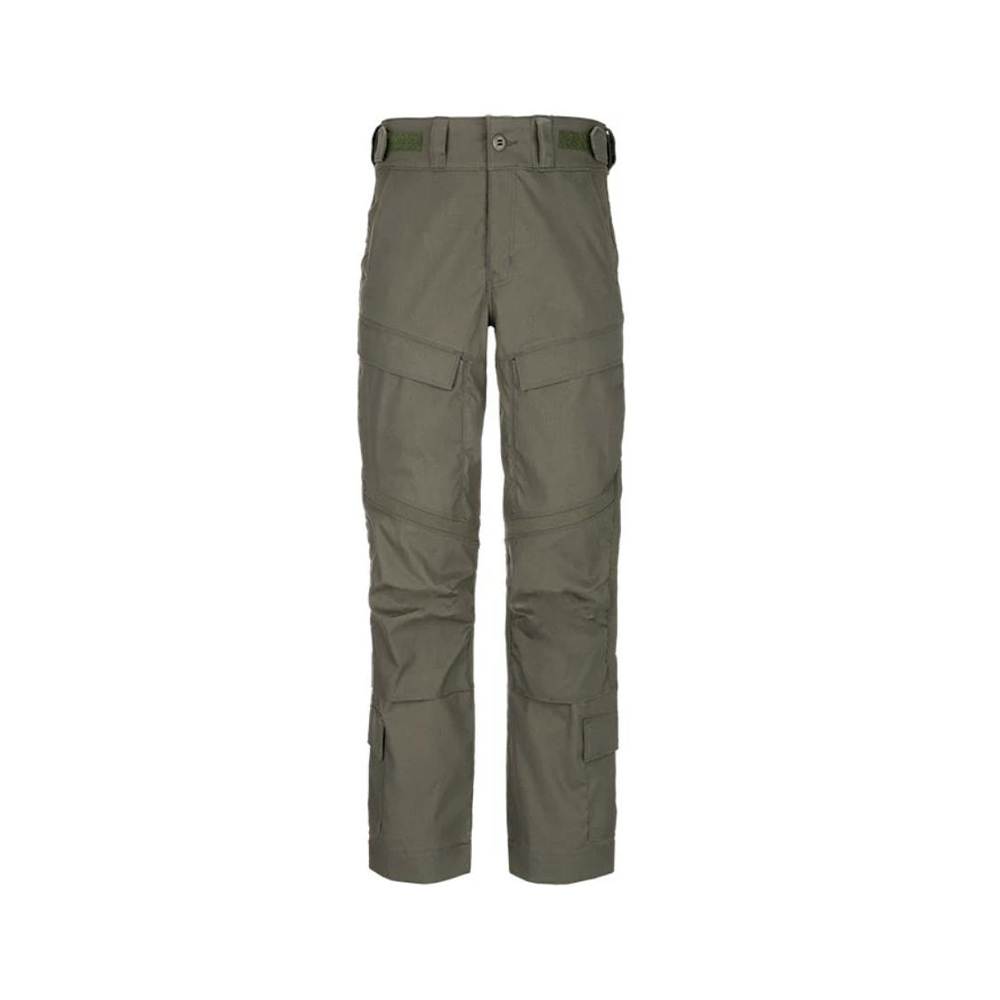 Straight-Leg Cargo Pants with Large-Capacity Side PocketsThese straight-leg cargo pants feature layered side pockets and a roomy cut, illustrating the added construction that affects labour planning for mixed orders.View Product →
The spread between garment types is wide enough to change a delivery schedule. A basic graphic tee and a cargo pant with patch pockets can differ by a factor of three in labour content, which means the same line, the same headcount and the same working hours produce very different volumes. Buyers who plan a mixed programme on one average SAM will misallocate capacity across the whole order book.
This is also why vertically integrated production changes the conversation. When fabric, cutting and sewing sit inside one operation, a standard can be re-timed against the actual fabric being used rather than an assumed one, and the revision reaches the line before the bulk run starts.
Frequently Asked Questions
Is SAM the same as SMV?
Yes. Both describe the standard time for one operation at normal pace including allowances. The difference is convention: SMV appears more often in factory documents, SAM in buyer cost sheets and audit templates. Always check the allowance percentage behind the figure.
What is a realistic operator efficiency target?
Most plants plan knitwear between 60 and 80 percent, with the higher end reserved for long runs and simple constructions. A line at 85 percent or above is usually running one style with stable balancing and low changeover frequency.
How do I convert SAM into daily capacity?
Multiply the number of operators by the minutes worked, then by planned efficiency, and divide by the style SAM. For 100 operators, 480 minutes, 75 percent efficiency and 10 SAM, the daily capacity is 3,600 pieces.
Why do two factories report different SAM for the same style?
Usually three reasons: different allowance percentages, a different operator rating, or one factory measured a sample while the other measured bulk fabric. Ask for the operation list and the allowance breakdown before treating either value as comparable.