English
 中文简体
 Français
 Español
Content
- 1 Inside the Sewing Industry: A Working Definition
- 2 Stitch Classes and Machines That Set Your Unit Cost
- 3 How a Sewing Line Moves From Cut Panel to Carton
- 4 Where Stitching Gets Harder: Stretch Knits and Activewear
- 5 Productivity Math: SAM, Efficiency, and Real Capacity
- 6 Quality Control: Where Sewing Defects Really Come From
- 7 China and Vietnam: Two Sewing Bases, One Quality Standard
- 8 What Buyers Should Verify Before the First Sewing Order
- 9 Frequently Asked Questions About the Sewing Industry
A buyer approves a 120,000-piece knit top program, the fabric arrives on time, and the first carton still ships three weeks late. The cause rarely appears in a fabric report. It appears on the sewing floor: four extra minutes of handling at one operation, multiplied across 500 garments a day for six weeks.
Sewing is where an apparel program is won or lost. Fabric and design decide what a garment should be; the sewing floor decides whether it can be built at the quoted price, on the promised date.
Inside the Sewing Industry: A Working Definition
The sewing industry is the manufacturing segment that joins cut fabric panels into finished textile products using power-driven industrial machines, thread, and standardized stitch specifications, followed by inspection, finishing, and packing.
Three tiers are worth separating: home sewing on domestic machines, bespoke tailoring counted in garments per week, and industrial cut-and-sew counted in pieces per hour. The industrial tier is what brands buy, and it is planned around operator count, SAM, and a reject rate tracked to decimal points.
Where a factory sits in the chain changes how predictable that output is. A vertically integrated knitwear manufacturer that also runs weaving, dyeing, embroidery, printing, and washing keeps fabric shade, hand feel, and finishing capacity under its own control instead of negotiating for them while a line is running.
Stitch Classes and Machines That Set Your Unit Cost
Four stitch classes cover almost all knit garment construction: 301 lockstitch, 504 overlock, 406 coverstitch, and 304 zigzag lockstitch for bartacks and buttonholes.
| Stitch class | Machine | Typical application | Working SPI |
| 301 | Single-needle lockstitch | Plackets, collars, topstitch, zipper setting | 10 to 12 |
| 504 | Three-thread overlock | Side seams, armhole joins, edge neatening | 10 to 12 |
| 516 | Five-thread safety stitch | Seams needing strength plus a neatened edge | 11 to 13 |
| 406 | Two-needle coverstitch | T-shirt and sleeve hems, neck binding | 10 to 12 |
| 607 | Flatlock flatseam | Leggings, activewear, low-bulk joins | 10 to 12 |
| 304 | Zigzag lockstitch | Bartacks, buttonholes, belt loops | Not applicable |
Thread and needle follow the fabric. Core-spun polyester goes into seams that must stretch, spun polyester where cost dominates, and needle size runs from 9 to 11 for fine jersey up to 14 for heavy fleece. The wrong needle size is one of the most common causes of holes that only appear after the first wash.
A knit polo shirt shows why this matters: placket, collar, sleeve, side seam, hem, and bartack, each with its own machine setup and its own failure mode.
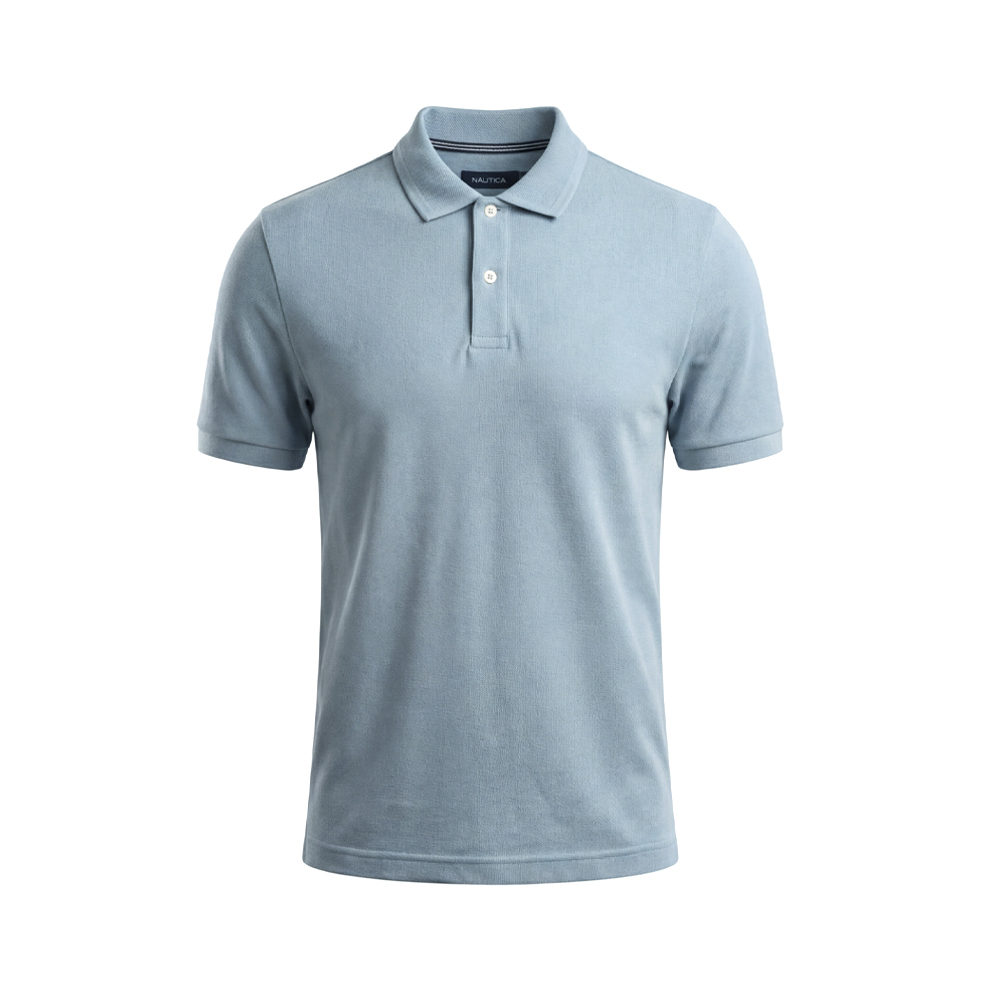 Men's Cotton Short Sleeve Polo Shirt with Three-Button PlacketHigh-GSM cotton polo with structured collar, three-button placket, side vents, and shape retention, suited to office-to-weekend wear.View Product →
How a Sewing Line Moves From Cut Panel to Carton
A sewing line turns cut panels into finished garments through eight repeatable stages, and skipping any one of them surfaces later as a defect or a delay.
- Fabric relaxation and inspection: knit rolls rest around 24 hours so the cloth does not shrink after the seam is sewn.
- Spreading and cutting: markers control grain and shade, and every panel receives a numbered ticket.
- Bundle preparation: panels are matched, counted, and grouped by size and shade before reaching a machine.
- Main assembly: shoulder joins, sleeve attachment, and side seams, mostly on lockstitch and overlock machines.
- Coverstitch and hemming: hems, necklines, cuffs, with differential feed set to the stretch of the fabric.
- Trims and reinforcement: bartacks, buttons, buttonholes, labels, and drawcords.
- Inline inspection: the operator checks the seam at the machine, which catches most defects at the lowest cost.
- End-line inspection and packing: AQL sampling, needle detection, pressing, and folding before cartons close.
Where Stitching Gets Harder: Stretch Knits and Activewear
Stretch activewear is the hardest sewn category to keep consistent, because every seam has to extend with the fabric without cracking, grinning, or curling at the edge.
These styles usually run on flatlock machines with multiple needles and threads, with elastic fed under controlled tension and differential feed adjusted to fabric weight. Needles drop to size 9 to 11, stitch density stays at 10 to 12 per inch, and the seam is accepted on recovery rather than appearance.
High-waist leggings are the clearest example, since waistband, gusset, and leg seams each carry a different stretch requirement on the same garment.
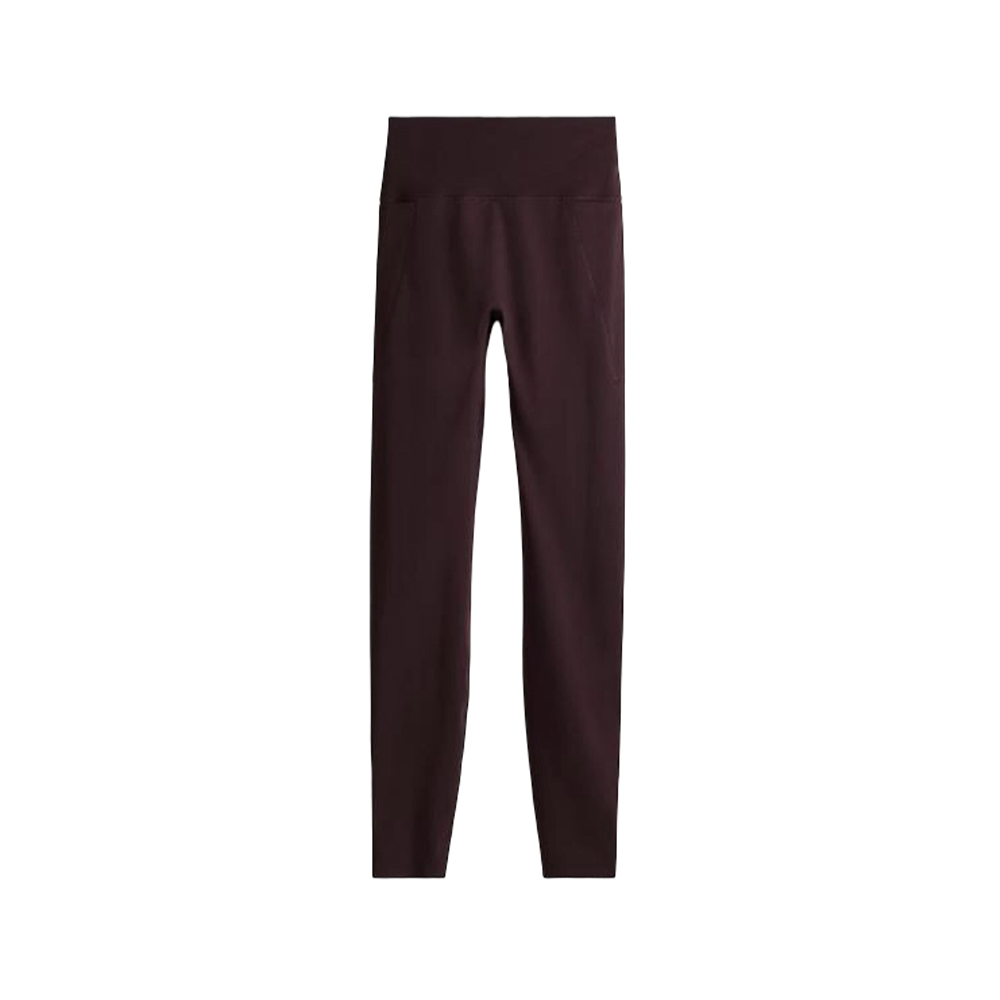 Recycled Nylon High-Waist Yoga Leggings with Side PocketsHigh-waist recycled nylon-spandex leggings with side pockets, high stretch, and elastic recovery for yoga, workouts, or commuting.View Product →
Productivity Math: SAM, Efficiency, and Real Capacity
A sewing line's daily output equals operators multiplied by minutes worked, multiplied by line efficiency, divided by the standard allowed minutes of the garment.
The calculation is simple. Twenty-five operators, a 480-minute shift, and 75 percent efficiency on a garment carrying 10 standard allowed minutes gives 25 x 480 x 0.75 / 10, or roughly 900 pieces a day. Swap that sample shirt for a hooded sweatshirt at 30 minutes and the same line drops to 300 pieces.
Quality Control: Where Sewing Defects Really Come From
Most sewing defects are created before the needle arrives, in cutting, fabric relaxation, machine setup, and bundle handling.
Skipped stitches, needle damage, seam puckering, and broken stitches on stretch seams account for most claims, and each one traces back to a cause upstream of the operator.
- Inspection only at the end of the line
- Machine settings copied between styles without re-checking tension
- Washing, printing, and embroidery subcontracted
- No needle detection before packing
- Seam checks after every operation, recorded
- Documented machine settings per style and fabric lot
- Embroidery, printing, and washing inside the same group
- Needle detection plus AQL 2.5 end-line inspection
Stitch performance is a machine-setting problem as much as a fabric problem, and the checks worth running on a floor are collected in what buyers need to verify in sewing technology.
Lofted fabrics behave differently again. A coral fleece homewear set needs overlock tension low enough not to crush the pile and coverstitch hems that do not grin through after washing.
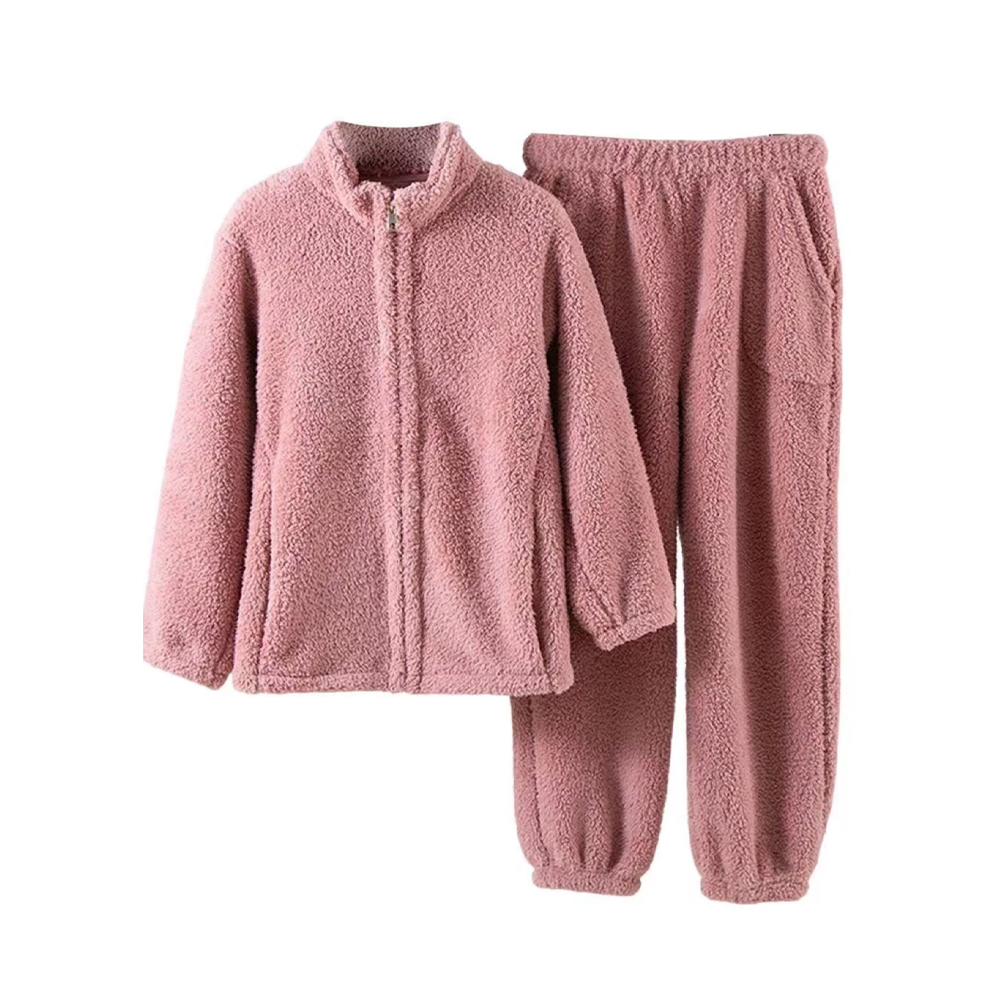 Women's Pink Coral Fleece Two-Piece Homewear SetPlush coral fleece set with zip jacket, elastic cuffs and waistband, side pockets, and anti-pilling finish for winter lounging.View Product →
China and Vietnam: Two Sewing Bases, One Quality Standard
Splitting production between China and Vietnam works only when both sewing bases share one technical package, one stitch specification, and one inspection standard.
| Base | Main strength | Watch-outs | Knit lead time after fabric approval |
| China | Weaving, dyeing, embroidery, printing, and washing inside one industrial cluster | Line capacity tightens from August as peak season starts | 30 to 45 days |
| Vietnam | Lower labor cost and preferential duty access to the EU, UK, and CPTPP markets | Fabric is often imported, so sampling loops run longer | 45 to 60 days |
What Buyers Should Verify Before the First Sewing Order
Six checks separate a sewing floor that can hold a specification from one that only talks about capacity.
- Stitch specification per seam: class, density, thread, needle size, and seam allowance written into the tech pack.
- Capacity math: SAM, operator count, working minutes, and efficiency history on comparable styles.
- Machine list by type, including coverstitch, flatlock, bartack, and buttonhole machines, not only lockstitch.
- Inline inspection routine and the defect categories that trigger a rework loop.
- Fabric and finishing control: who owns relaxation, washing, printing, and embroidery.
- A pre-production sample signed on both sides, with seam performance tested on the production fabric lot.
Frequently Asked Questions About the Sewing Industry
How many stitches per inch do knit garments use?
Most knit seams run at 10 to 12 stitches per inch with a size 9 to 11 needle, while woven shirting runs at 12 to 14. Consistency matters more than the number itself, so the acceptance test should be seam performance on the production fabric, not the value printed in the tech pack.
What is a realistic daily output for one sewing line?
With 25 operators, a 480-minute shift, and 70 to 80 percent efficiency, a basic crew-neck T-shirt at roughly 10 standard allowed minutes yields about 800 to 960 pieces a day. The same line falls to 300 or fewer on a complex hooded style, which is why capacity should be quoted per style.
Why do broken stitches appear on stretch garments after washing?
Usually because a seam was sewn on a lockstitch machine instead of a flatlock or coverstitch, or because thread and elastic tension were set for appearance rather than recovery. Both faults pass final inspection and only appear after the garment is worn and washed.
Does a lower labor rate always mean a lower garment price?
No. Labor is one input among fabric, trims, finishing, freight, duty, and rework. A factory with cheap minutes but frequent rework and air freight costs more per shipped unit than a higher-cost factory with stable efficiency and in-house finishing.