English
 中文简体
 Français
 Español
Content
- 1 What Is Bonded Fabric, Exactly?
- 2 The Five Bonded Fabric Families Buyers Meet
- 3 How the Bond Is Made, and Why Line Settings Decide Quality
- 4 What Bonded Construction Gives You, and Where It Breaks
- 5 Where Bonded Fabric Appears in an Apparel Range
- 6 A Sourcing Checklist Before You Approve Bonded Fabric
- 7 Bonded Fabric: Common Buyer Questions
A bonded fabric usually passes the first sample review and fails the third bulk wash. The shell lifts along the sleeve, the seam tape curls at the cuff, and the buyer discovers that "bonded" described a process nobody wrote down. The word covers five material families, and each one fails in its own way.
For a sourcing team the useful question is not the dictionary definition. It is which bond sits inside the garment, how strong that bond has to be for the end use, and what happens after five home washes. This guide answers those three questions in the order a buyer meets them.
What Is Bonded Fabric, Exactly?
Bonded fabric is a textile in which fibres, or two or more layers, are held together by an adhesive, heat and pressure, a chemical binder or a stitching yarn instead of by woven or knitted interlacing.
Three uses of the term cause most of the confusion in sourcing meetings. First, a fabric can be made of bonded fibres: a web is formed and then consolidated into a sheet through spunbond, spunlace, needlepunch, thermal or chemical bonding. Second, finished fabrics can be bonded to each other: a membrane glued to a knit shell, foam laminated to jersey, or two jerseys joined by an adhesive film. Third, bonding happens during garment making, when a fusible interlining is pressed into a collar, placket or waistband.
Bonded leather sits outside all three. It is leather fibre mixed with a latex or polyurethane binder and pressed into sheet form, often with only 10 to 20 percent leather content by weight. It is sold as leather, not as apparel fabric, and it is tested differently.
The Five Bonded Fabric Families Buyers Meet
Most commercial bonded fabrics fall into five families, and each family is quoted, sampled and tested with a different set of numbers.
| Family | How the bond forms | Typical apparel use | What to specify |
| Spunbond nonwoven | Filaments are extruded and self-bonded while still hot | Pocketing, interlining, packaging, protective covers | Weight in GSM, tensile strength, elongation |
| Laminated composite | Membrane or foam glued to a shell with dot or full-surface adhesive | Softshell jackets, outerwear, activewear | Peel strength, breathability, wash stability |
| Fusible interlining | Resin dots activated by heat and pressure during garment making | Collars, plackets, cuffs, waistbands | Fusing temperature, pressure, bubble test after fusing |
| Stitch-bonded web | Fibre web consolidated by a knitting yarn | Wadding, blankets, low-cost lining | Stitch density, shrinkage, weight |
| Bonded leather | Leather fibre plus latex or PU binder, pressed into sheet | Small leather goods, trim, some footwear | Leather content percentage, flex endurance |
How the Bond Is Made, and Why Line Settings Decide Quality
Bond strength comes from three inputs: surface preparation, adhesive quantity, and the heat, pressure and dwell time used to close the bond.
- Prepare the surface. The fabric is dried, opened and sometimes treated with corona or plasma so the adhesive can wet the fibre instead of sitting on top of it.
- Apply the adhesive. Dot coating keeps breathability, full-surface coating builds a barrier, powder suits interlining, and flame lamination is used where foam has to melt into the pile.
- Close the bond. Heat softens the polymer, pressure pushes it into the fibre, and dwell time lets it flow before the nip opens.
- Cool and cure under tension. Controlled cooling prevents curl, edge wave and residual stress that only appear after the first wash.
- Test the result. Peel strength, wash performance and hand feel are checked against the approved golden sample, not against a verbal description.
Failure modes map directly to those settings. Too much heat and the adhesive strikes through the face fabric, leaving a shiny, stiff panel. Too little pressure and the adhesive wets out poorly, so the bond passes on the sample and separates after laundering. Damp fabric traps moisture at the interface and blisters in the first laundry cycle.
What Bonded Construction Gives You, and Where It Breaks
Bonding buys stability, thinness and clean edges, and it charges for them in stiffness, repairability and wash limits.
What you gain
- Stable panels that hold shape without heavy interlining
- Flat, bulk-free seams on stretch and lightweight knits
- Wind and water resistance from a continuous laminate
- Fewer needle holes, which matters on down and membrane shells
What you pay for
- Stiffer hand than the same fabric sewn conventionally
- Almost no repair path once a bond separates
- Wash and dry-clean ceilings set by the adhesive, not the shell
- Mixed-material panels that are hard to recycle
Durability is usually proven on a wash ladder rather than a single test. Most programs pick three points so they can see where performance starts to drop.
Where Bonded Fabric Appears in an Apparel Range
Bonded constructions concentrate in outerwear, activewear and anywhere a sewn seam would be too bulky or too visible.
- Softshell and hardshell jackets with laminated membranes and taped seams
- Sports bras and yoga tops with bonded or ultrasonic seams and moulded cups
- Seamless and compression activewear where panels are joined without thread
- Bonded fleece and foam-backed knits for hoodies and cold-weather layers
- Fusible interlinings in collars, plackets and waistbands, the most common bonded material inside a factory
- Pocketing, wadding and small trim where spunbond or stitch-bond does the job
Outerwear is the category where the bond carries the warranty. A jacket can have excellent fabric and still fail because the lamination line was set for a lighter shell, so specification should travel with the panel rather than with the style number.
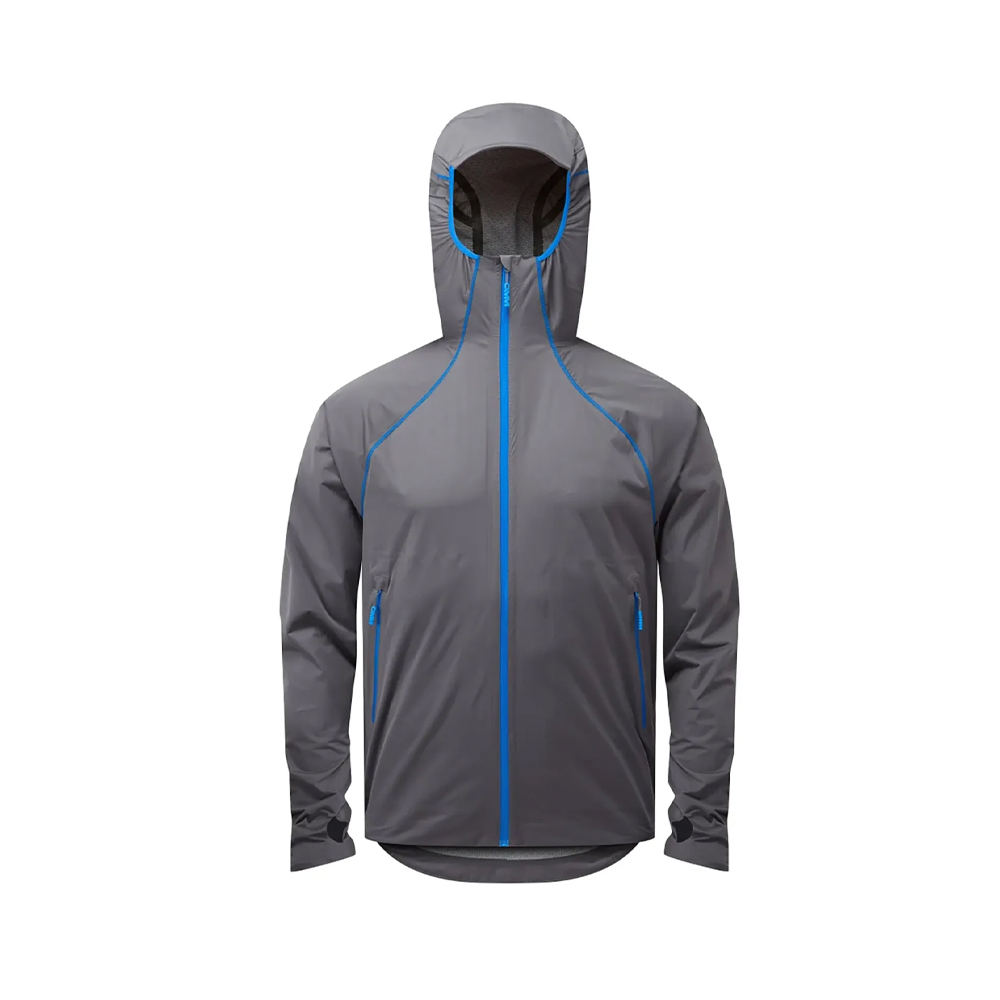 Men's Full Glue Ultra Outdoor JacketFull-glue construction and a PFAS-free waterproof membrane make this four-way-stretch outdoor jacket relevant where lamination reliability matters.View Product →
Activewear uses a different bond logic. Elastic knits are joined with adhesive films or ultrasonic welding so the seam stretches with the body, and moulded cups rely on a foam-to-fabric bond that has to survive both washing and compression.
 Women's Cross-Back Yoga Sports BraA stretchy, moisture-wicking cross-back bra for yoga and training, suited to activewear seams and bonds that must flex with the body.View Product →
On lighter travel pieces the same thinking applies at a smaller scale, where a packaway jacket depends more on consistent lamination than on stitching density.
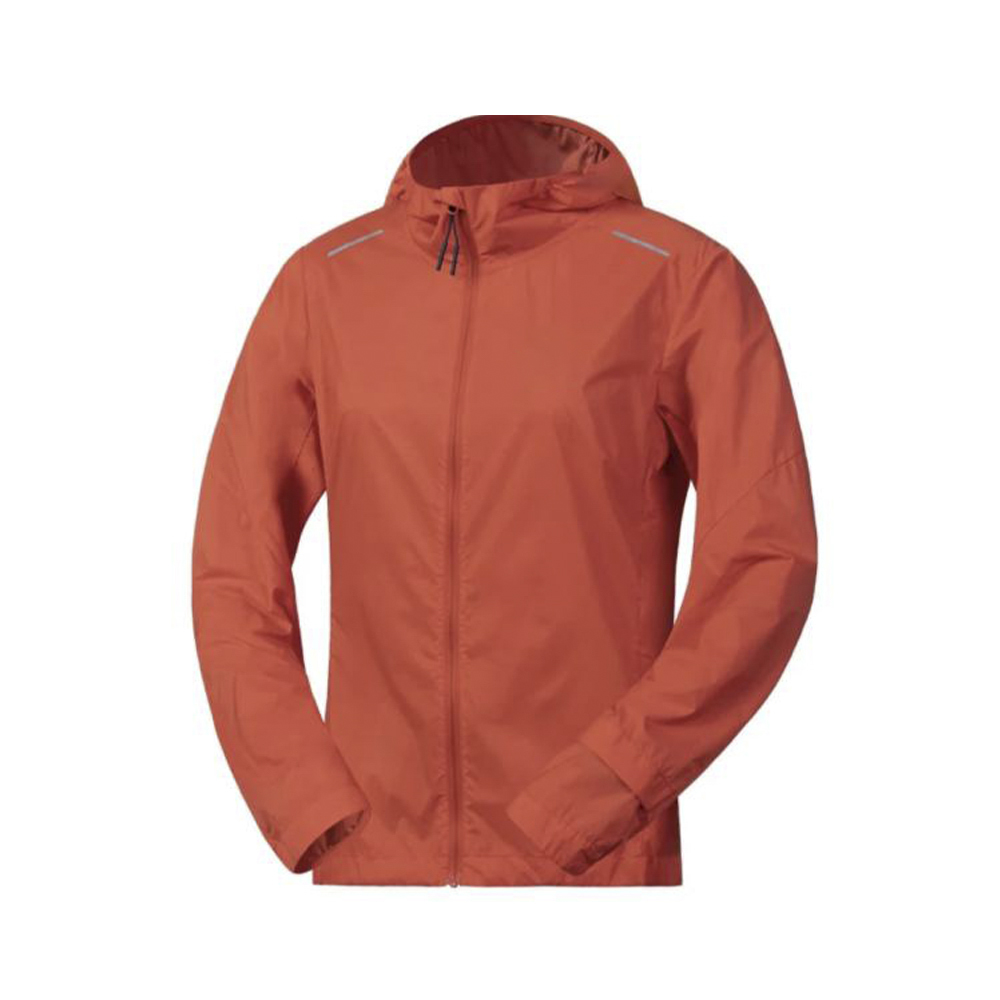 Men's UPF100+ Packaway Multifunction Outdoor JacketA lightweight packaway jacket with UPF100+ protection and breathable cooling fabric, relevant for travel pieces where lamination consistency matters more than stitching density.View Product →
When bonding, embroidery, printing and washing sit inside one supply chain, as described in this look at vertical integration in leisurewear manufacturing, the bonding step is less likely to be re-quoted by a third party using a different adhesive.
A Sourcing Checklist Before You Approve Bonded Fabric
Approve a bonded fabric on measured bond performance, not on the hand feel of a single sample.
- Name the family and the bonding route on the tech pack: nonwoven, laminated, fusible, stitch-bonded or leather.
- Write peel strength with the test method and the specimen width, so two labs cannot report different numbers for the same roll.
- Fix the wash protocol, including temperature, detergent and drying method, because most delamination appears after drying rather than washing.
- Request a bonded panel rather than a swatch, so edge curl and dimensional change are visible before cutting.
- Check shrinkage and curl after bonding, since a laminate can move a full size across a wide panel.
- Confirm the seam and tape plan with the bonding supplier, not only with the sewing room.
- Ask which line will run the bulk and whether the sample came from that same line.
| Test | What it proves | What buyers usually write |
| Peel strength, 180 degree | How strongly the layers hold at the interface | 1.5-3 N/cm on laminated knits, method and width stated |
| Home laundry test | Delamination, bubbling and edge curl | 5, 10 or 25 cycles at 40 C with no separation |
| Dimensional stability | Shrinkage and curl after bonding and washing | Within 3 percent after three washes |
| Hydrostatic head, shells | Water resistance retained after bonding and washing | Per end-use spec, tested again after wash |
| Hand panel | Stiffness drift from the approved standard | Blind comparison against one sealed golden sample |
The production side of that checklist is covered in our apparel manufacturing solutions overview, which sequences bonding, embroidery, printing and washing before cutting begins.
Bonded Fabric: Common Buyer Questions
Is bonded fabric the same as nonwoven?
No. Nonwoven is one family inside the bonded group, made from a fibre web consolidated by heat, chemical binder or needling. A laminated jacket shell is bonded fabric but not a nonwoven, because it is built from two finished textiles joined by an adhesive.
Is bonded fabric strong enough for outerwear?
Yes, when peel strength and the wash protocol are specified in writing. Bonded shells run for seasons in outdoor programs. Failures usually come from an unspecified bonding window, a change of adhesive batch or a sample made on a different line, not from the concept itself.
Can bonded fabric be washed and dry cleaned?
It depends on the adhesive rather than the shell. Hot-melt polyurethane films generally tolerate home washing at 40 C, while some solvent-based systems soften in dry cleaning and plasticise at high drying temperatures. Test the finished garment, then write the care label from the test result.
Does bonding make a garment harder to recycle?
Usually yes. A bonded panel mixes fibre, adhesive and sometimes membrane, and the layers cannot be separated by mechanical recycling. Mono-material laminates and water-based adhesives reduce the penalty, but the design decision is easier to make at the sampling stage than at the end of a season.