English
 中文简体
中文简体
 Français
 Español
Content
A buyer evaluating a homewear fit suit often starts with the size chart, but that table alone rarely predicts how the set will feel after a few hours on the sofa, during a stretch, or after three washes. Returns driven by poor fit — sleeves that twist when you lie on your side, waistbands that dig in after a meal, cuffs that trip you up on stairs — erode margins far more than a fabric cost difference ever could. Getting fit right means moving from static sizing to a dynamic check that accounts for movement, shrinkage, and the specific expectations of homewear buyers.
Why “Fit” Matters in Homewear
Homewear comfort is not just about softness. A properly fitted suit distributes fabric weight evenly so nothing bunches, pulls, or restricts natural movement. For sourcing buyers, poor fit directly increases return rates, harms brand trust, and triggers safety complaints — especially in kids’ ranges. Static measurements taken on a flat garment tell you part of the story. You also need to understand how the suit performs when the wearer curls up, stretches an arm to reach a shelf, or sits cross‑legged. In our homewear collection, we test every silhouette in multiple positions to catch issues that a simple bust‑waist‑hip chart would miss.
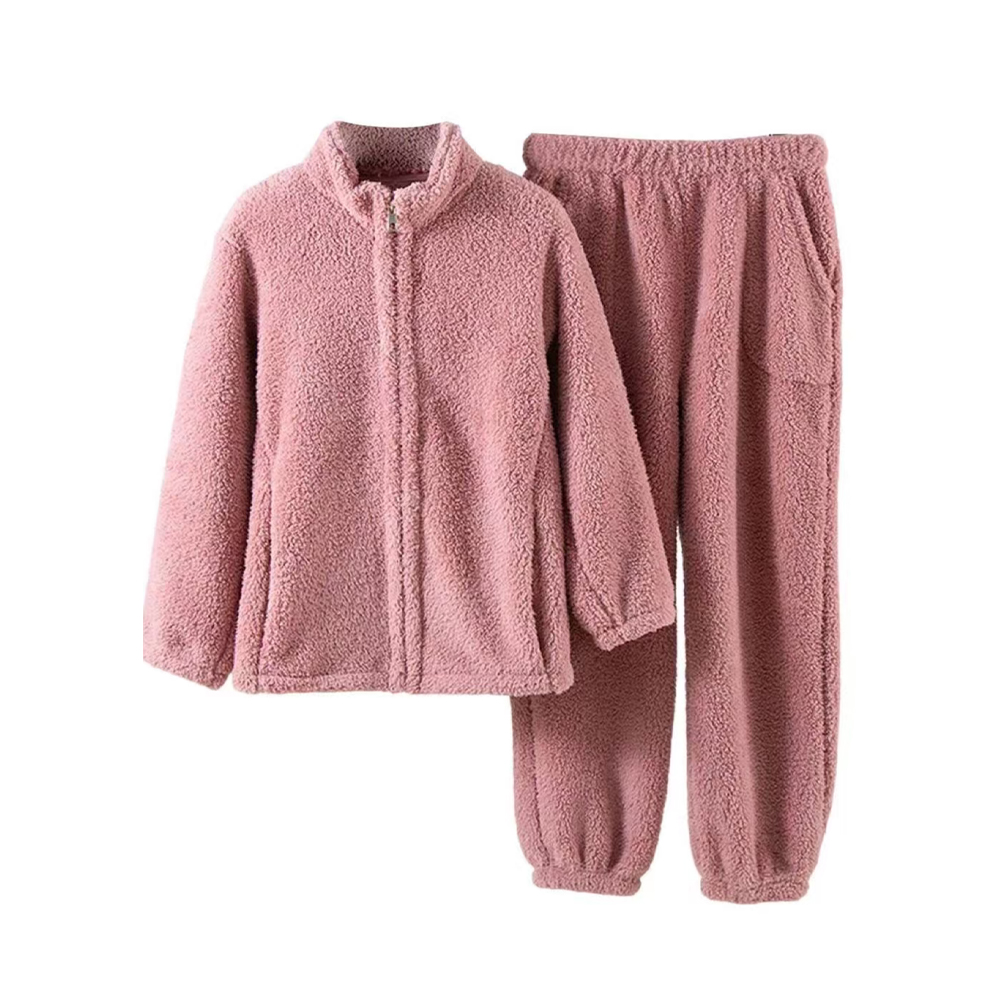
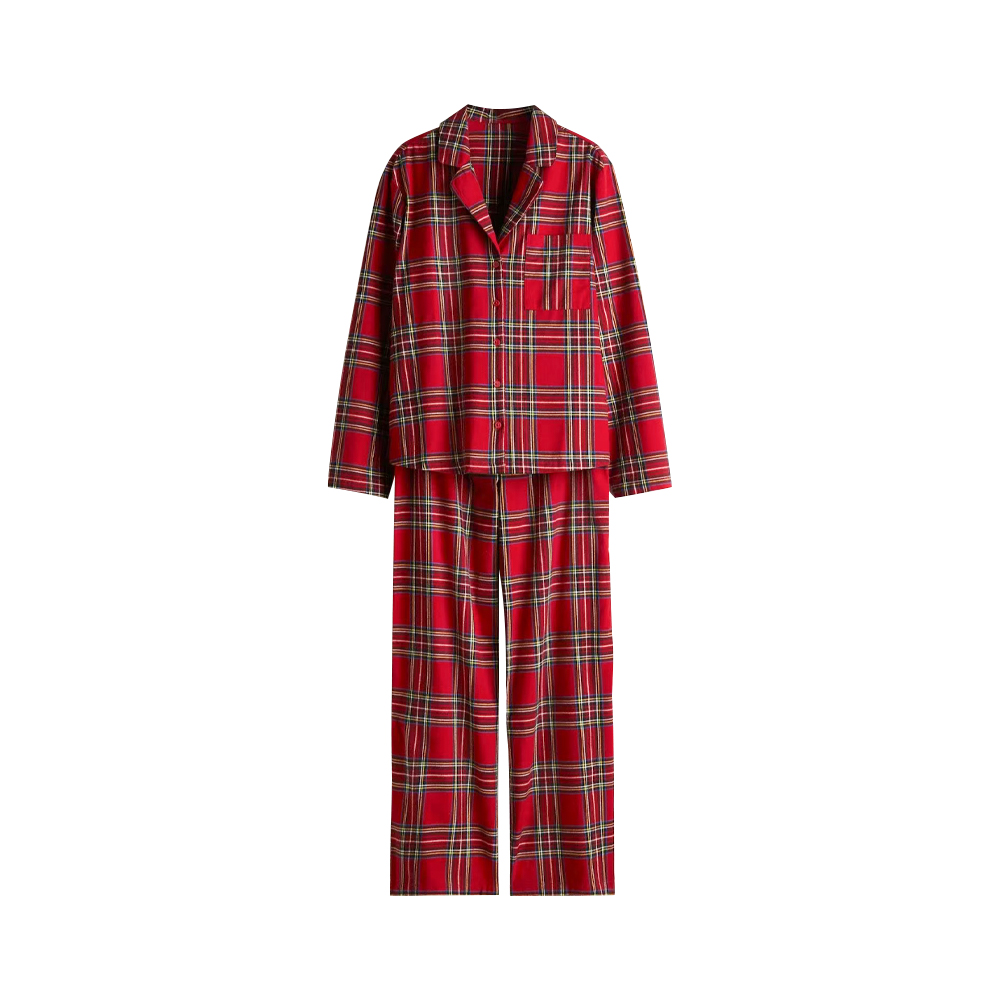
Two examples make this clear. A warm coral fleece homewear suit must retain its thermal loft without ballooning at the back when seated. Too loose and cold air enters; too tight and the pile compresses, reducing insulation. A flannel cotton homewear set needs a relaxed hip but a stable waistline so it doesn’t slide down during light housework. Homewear fit is a balance of static ease and dynamic hold, not a single ideal number.
The Key Fit Points of a Homewear Suit
During sampling, our technical team focuses on three zones that cause most fit-related complaints.
Shoulders & sleeves
The shoulder seam must sit flat on the natural shoulder point, not halfway down the upper arm. If the seam drifts, the sleeve will pull at the underarm during forward motion. Sleeve length should end at the wrist bone without riding up when the wearer raises their arms. Cuffs on a homewear set should not be so tight that they restrict circulation, nor so loose they slide over the hand while typing or reading.
Waist & hips
The waistband is the make-or-break detail. On woven or stable knit homewear pants, an elasticated waist should stretch comfortably without rolling, and the drawstring — if present — must hold its knot without biting the skin. Hip ease needs to accommodate sitting cross‑legged; a minimum of 2‑3 inches of extra circumference compared to the standing hip measurement usually prevents horizontal stress lines. If the waistband leaves red marks after an hour, the suit fails the most basic comfort test.
Leg length & cuffs
Cuff openings should clear the floor by roughly half an inch when standing barefoot. Too long, and the fabric will fray and cause tripping. Too short, and the ankle is exposed when the wearer lounges with legs extended. Ribbed or turned-back cuffs add structure but must maintain their shape after washing — a point we revisit in the shrinkage section below.
Fabric, Stretch, and Shrinkage: The Hidden Fit Factors
Fit does not stop at the cut. Fiber type, knit structure, and post‑laundry size stability can alter a perfect sample into an unwearable piece within a few cycles. Cotton‑rich fabrics like flannel cotton or our silk‑cotton blends typically shrink 3‑5% in the first wash if not pre‑shrunk properly. Coral fleece, being polyester‑based, has minimal shrinkage but can stretch irreversibly if the loop pile is not heat‑set correctly.
For stretch fabrics, recovery is what matters. A homewear suit with spandex must snap back to its original dimensions after a wear session. Ask your supplier for stretch‑and‑recovery test reports (ASTM D2594 or equivalent). Request shrinkage data on the exact fabric and, if possible, a washed sample to compare against the production specs. On products like our organic cotton baby grow suits, we supply a detailed wash‑care label and shrinkage tolerance because any surprise size loss can turn a safe sleep garment into a risk.
How to Test a Homewear Fit in Three Steps
Whether you are a buyer inspecting a pre‑production sample or a consumer trying a new set at home, this short protocol reveals fit problems before they become return reasons.
- Sit and cross your legs. Note any tightness at the inner thigh seam or waistband digging. The seat seam should not pull down at the back.
- Raise both arms overhead and twist your torso. Sleeves and shoulders must stay in place without exposing the midriff. If the top rides up, torso length is insufficient.
- Check the care label and measure key points before and after washing. Place a fabric tape on shoulder width, sleeve length, pant inseam, and waist relaxed. A difference over 5% in length or 3% in width after the first standard wash calls for a conversation with the factory.
Using this method across a pre‑production sample helps you confirm that the supplier’s size chart translates into real‑world wear. For a deeper look into how factory‑level controls support consistent fit, see why vertical integration defines a reliable factory — when knitting, dyeing, and sewing live under one roof, tolerance management becomes far more predictable.
Fit Considerations for Baby and Kids’ Homewear
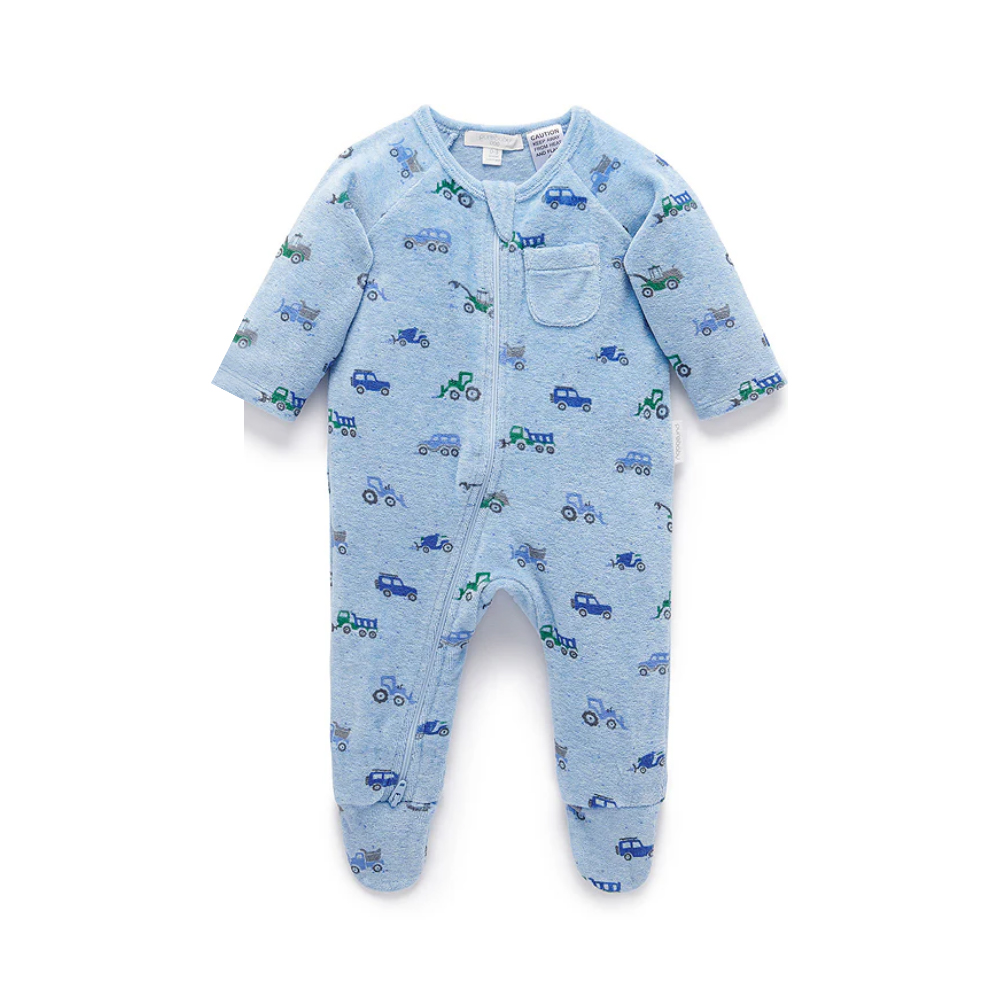
Children’s homewear brings safety standards into the fit conversation alongside comfort. A sleep or lounge suit that is too tight around the chest or neck can restrict breathing; one that is too long can bunch under foot and cause a fall. The organic cotton baby grow suit we produce uses a relaxed silhouette with extra room in the seat and thigh, while the ankle cuffs are snug enough not to ride up and cover the face. For crawling babies, the knee area must allow full flexion without seam stress.
Key checks for sourcing children’s homewear include: neck opening stretch (must pass the head without forcing), sleeve cuff stretch (no constriction at the wrist), and crotch depth (enough ease so the garment doesn’t pull up when the child sits). Always confirm that the fabric has a soft, flat seam construction to avoid skin irritation. In kids’ homewear, fit is safety as much as comfort.
What Sourcing Buyers Should Ask Suppliers
To minimise fit‑related failures, incorporate these questions into your supplier evaluation process:
- Do you supply a full graded size chart with tolerance ranges for each measurement point?
- Can you provide shrinkage and stretch‑recovery test reports for the intended fabric?
- Are patterns adjustable for regional body shape differences, and what is the minimum order quantity for fit adjustments?
- How do you control consistency of elastic tension and drawstring length across production runs?
- When sampling, can you deliver two washed samples — one after three home laundry cycles — for real‑world fit approval?
A supplier that answers these with documentation rather than reassurance gives you a measurable lead on quality control. During fit discussions, we also recommend buyers revisit the fit and fabric verification steps that apply across leisurewear categories; many of the same principles — seam placement, recovery, shrinkage — transfer directly to homewear sourcing.