English
 中文简体
 Français
 Español
Content
- 1 Where Sewing Technology Sits Inside the Cost of a Garment
- 2 Five Sewing Technologies That Are Actually Being Adopted
- 3 What Sewing Technology Looks Like on Stretch Knitwear
- 4 What to Verify in the Sewing Room Before You Place the Order
- 5 Why Vertical Integration Changes the Sewing Technology Equation
- 6 Stitched or Sealed: a Second Set of Sewing Technologies
- 7 Scale, Automation and What the Numbers Actually Mean
- 8 Four Mistakes Buyers Make About Sewing Technology
- 9 What Comes Next, and What It Is Worth to You
A 50,000-piece order of 280 gsm fleece hoodies can absorb 55 to 65 percent of its total production time in the sewing room alone. Change the stitch density by one stitch per inch, add a cover-stitch operation, or lose two machines to a breakdown, and a 20-day plan quietly becomes a 28-day plan. That is why sewing technology matters to buyers: it decides unit labor cost, seam quality, and whether a factory can still make money on a 600-piece repeat order.
The conclusion comes first. Only three advances in sewing technology genuinely change what a buyer pays and receives. They reduce the variation between one operator and the next, they shorten the time it takes to change styles, and they make quality data traceable. Touchscreens, phone apps and voice prompts only matter to the extent that they serve those three outcomes.
Where Sewing Technology Sits Inside the Cost of a Garment
Sewing is the most labor-intensive stage of apparel manufacturing. Across a typical knitwear order, cutting may take around 8 percent of the direct labor, finishing and packing another 15 percent, and sewing the remaining 70 percent or more. Relatively small changes in the sewing room therefore move the total price more than almost anything else a factory does.
Four machine families do most of the work on a knitwear line, and each has its own technology curve:
- Lockstitch machines, used for main seams, plackets and topstitching, where stitch length and thread tension decide whether a seam opens up when the garment stretches.
- Overlock machines, which trim and bind an edge in a single pass and set the seam allowance that a knit garment will live or die by.
- Cover-stitch machines, which produce the flat, stretchable hems and neckline finishes that define sportswear and leisurewear.
- Specialty units such as buttonhole, bar-tack and blind-hem machines, plus bonding and seam-taping equipment for seams that are sealed rather than stitched.
Older lockstitch machines run at a fixed speed and rely entirely on the operator's foot and eye. Newer ones read the fabric, adjust the feed, cut the thread automatically and report their own output. The gap between those two generations is where most of the cost difference sits.
Five Sewing Technologies That Are Actually Being Adopted
Trade fair brochures list dozens of features. In practice, five have moved from novelty to standard on serious production floors.
Pedal-Free Operation and Automatic Thread Trimming
Replacing the foot pedal with a knee lever, a sensor or a button frees both of the operator's hands to guide the fabric. Automatic trimming removes thread tails without a separate snip. The effect is not primarily speed. It is consistency: two operators on the same style produce single-piece times that sit much closer together, which makes quoting a 5,000-piece order far less of a gamble.
Automatic Bobbin Changers and Bobbin-Low Sensors
A manual bobbin change costs 30 to 60 seconds of machine downtime plus a few seconds of re-threading. On a line producing 300 pieces an hour, that accumulates quickly. Automated changers swap bobbins in a few seconds, and low-bobbin sensors stop the machine before a seam runs out of thread. Buyers rarely see this technology, but they feel it in on-time delivery.
Vision Sewing and Digital Feed Systems
A camera tracks the seam edge while a servo-driven feed adjusts to the fabric's stretch. On cotton and spandex jersey, this is often the difference between a clean side seam and a wavy one. Digital feed also allows a factory to dial in differential feed values for a 180 gsm single jersey and a 320 gsm fleece without mechanically resetting the entire machine.
Real-Time Monitoring and Machine-Level Data
Every machine on a modern line can report its output, downtime and rework to a shop-floor system. For the buyer, the practical value is simple. A delivery date built on machine data is a schedule; a delivery date built on a supervisor's estimate is a hope. When a factory can show hourly output per line, capacity discussions get much shorter.
Modular and Convertible Machines
Quick-change templates, adjustable gauge sets and modular attachments let one machine handle several operations. This matters most on orders below 1,000 pieces, where the cost of stopping a line to retool can exceed the value of the order itself.
| Technology | Problem It Solves | What the Buyer Observes | What to Verify |
|---|---|---|---|
| Pedal-free operation | Operator's hands occupied by pedal control | More consistent single-piece time | Spread between fastest and slowest operator |
| Automatic bobbin changer | Repeated machine stoppages | More predictable delivery dates | Machines per operator on the line |
| Vision sewing and digital feed | Wavy edges on stretch knits | Flatter, straighter seams | In-house seam test records |
| Real-time monitoring | Opaque production progress | Delivery dates backed by data | Access to hourly line output |
| Modular fixtures | Line downtime at style change | Smaller orders stay viable | Changeover time commitment |
What Sewing Technology Looks Like on Stretch Knitwear
Knit fabrics behave differently from wovens, and the sewing room has to compensate. Three variables decide whether a knit garment survives its first wash:
- Stitch density. Most knit garments are sewn at 8 to 12 stitches per inch, with lighter single jerseys at the higher end of that range. Too few stitches and the seam gaps; too many and the needle perforates the fabric and invites a run.
- Seam elasticity. The thread's elongation should broadly match the fabric's. A seam that stretches only 15 percent on a fabric that stretches 40 percent will fail the first time someone pulls the garment over their head. Thread elongation of 20 to 30 percent is common on stretch knits.
- Presser foot pressure. Excessive pressure on a jersey compresses the fabric ahead of the needle and pushes it back afterwards, producing a wavy edge that no amount of pressing will fix.
Where a factory can prove these variables are under control, it usually has a seam laboratory. The tests worth asking about are seam slippage to ASTM D1683, seam strength to ISO 13935-2, and elastic recovery to ASTM D2594. On a 220 gsm cotton-spandex legging, a minimum seam strength of 250 to 300 N in the critical crotch and side seams is a reasonable expectation.
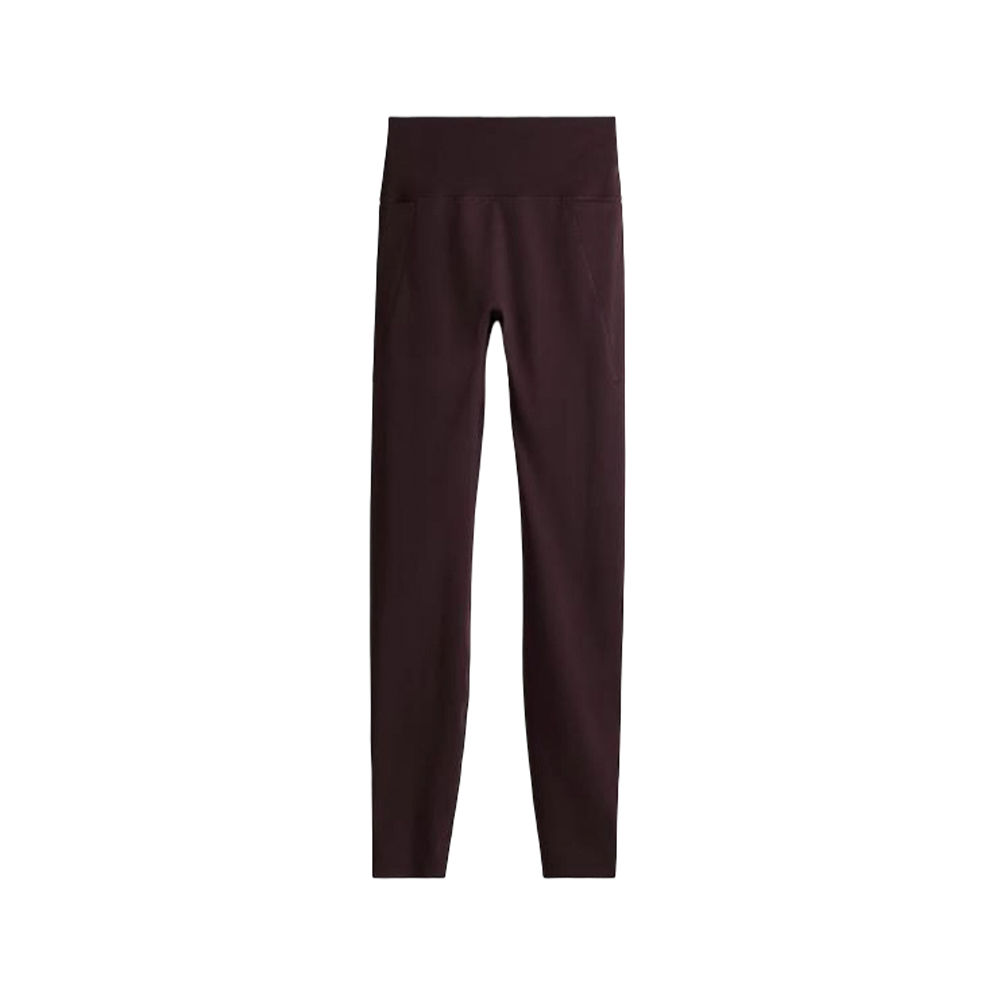
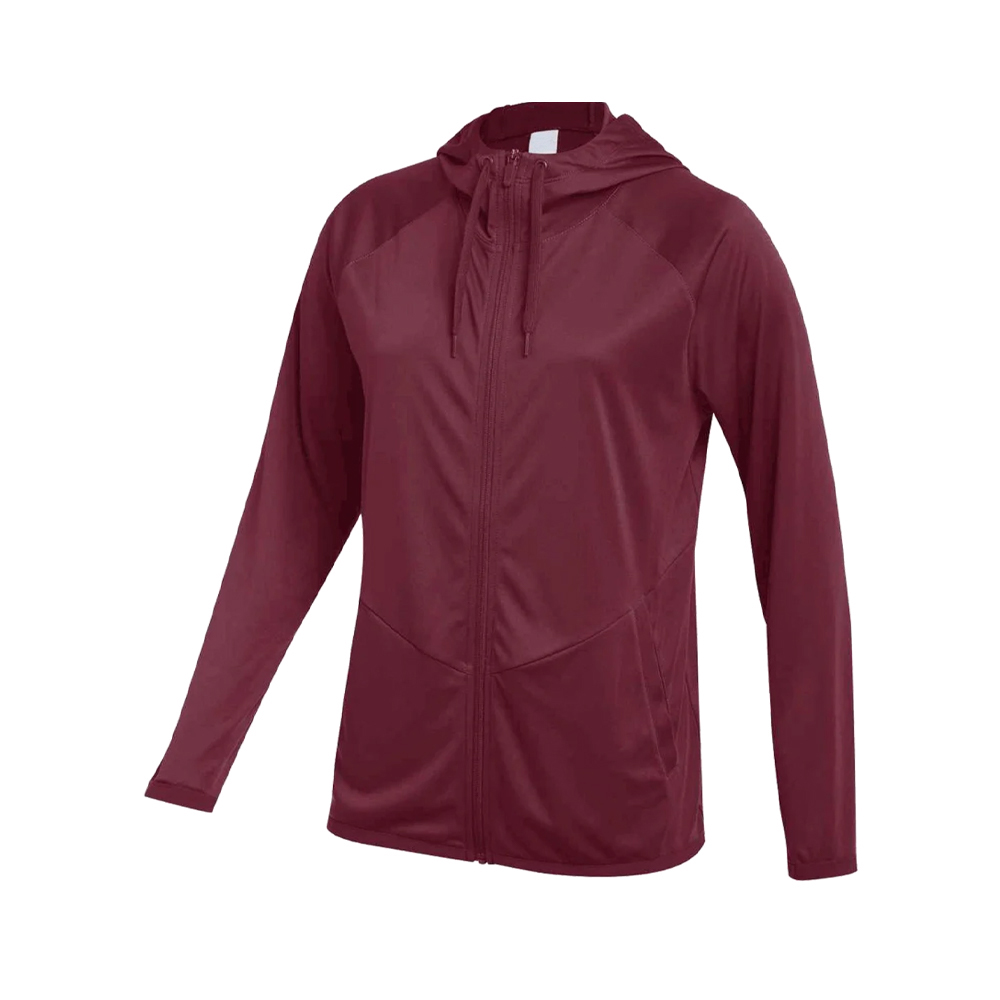 Women's Fast Dry Sport Training JacketTailored for dynamic female athletes, this maroon Nike training jacket redefines versatile sportswear, blending featherlight agility with advanced performance fabric t...View Product →
The same standard separates sportswear from basic knitwear. A fast-dry training jacket uses the same cover-stitch and overlock families as a cotton hoodie, but with tighter tolerances on differential feed and thread selection, because the fabric has to move without puckering.
What to Verify in the Sewing Room Before You Place the Order
Factory audits often spend most of their time on the cutting floor and the final inspection table, then walk through sewing in ten minutes. That order is backwards. Ask for:
- Machine count by type, plus average machine age. A line of machines from the early 2000s and a line of current models can differ by 15 to 20 percent in output per operator on the same style.
- Whether the line runs on a hanger system or in bundle form. Hanger systems keep single pieces moving, cut work-in-progress, and make it far easier to balance operations when a style has more than 30 sewing steps.
- First-pass yield, not final pass rate. A factory reporting 95 percent right-first-time is telling you something different from one that reworks everything and reports 99 percent at the end of the line.
- Style changeover time. Ask how long it takes from approved sample to full line output. Under three days is strong, a week is workable, and two weeks usually signals that the line is not genuinely modular.
- In-house laboratory equipment for seam strength and stretch testing, and who operates it.
These five answers tell you more about delivery risk than any brochure about automation.
Why Vertical Integration Changes the Sewing Technology Equation
Sewing is only the middle of the chain. Fabric woven and dyed by the same group, embroidery and printing done in-house, and garment washing all under one roof means the sewing room receives material whose shrinkage, width and hand feel have already been verified. There is no argument at the loading dock about which party owns a batch that ran short.
A group controlling weaving, dyeing and finishing, embroidery, printing, washing and garment production can move an order from grey fabric to finished garment without handing it to an outside contractor in the middle. That matters for reliable leisurewear production, where a small deviation in fabric shrinkage can spoil an entire sewing line's output.
Vertical integration does not automatically make the sewing better, and it is not a substitute for a calibrated machine or a trained operator. What it removes is a category of delay that no sewing technology can fix: waiting.
Stitched or Sealed: a Second Set of Sewing Technologies
Not every seam in a modern garment comes from a needle. Heat-sealed seam tape, ultrasonic bonding and glue-based reinforcement are now standard on outdoor and performance apparel. A fully taped outdoor jacket may carry 8 to 12 meters of seam tape, applied at temperatures typically between 130 and 180 degrees Celsius depending on the fabric and the tape chemistry. Applied at the wrong temperature or pulled through the machine too fast, the tape will look perfect on the inspection table and peel in the wash.
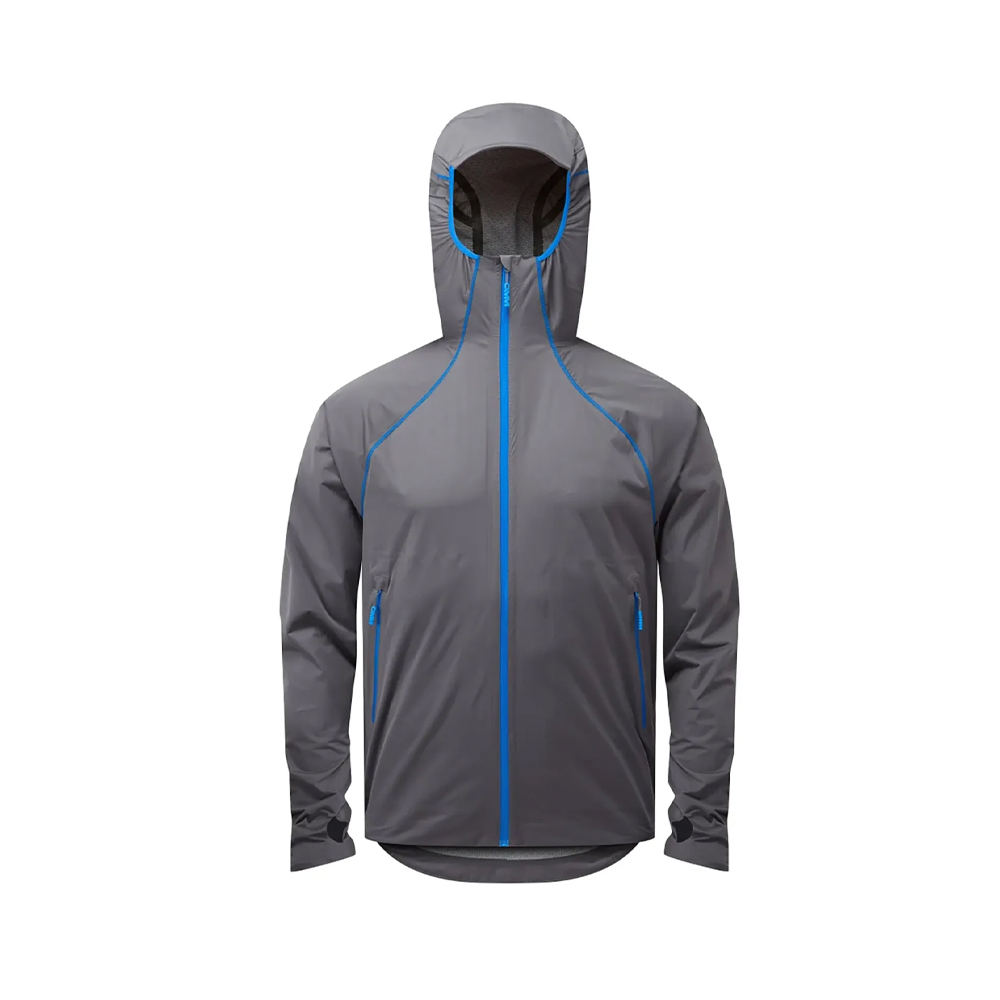 Men's Full Glue Ultra Outdoor JacketEngineered for male outdoor adventurers, the Jacket merges four-way stretch comfort with rugged environmental responsibility to become your ultimate companion for moun...View Product →
Buyers should request peel strength results for the specific fabric-and-tape combination used on their order, not a generic certificate from the tape supplier. The same discipline applies to garment washing, an operation that behaves like sewing in reverse: a controlled in-house wash at a defined temperature keeps shade variation and shrinkage inside tolerance, while an outsourced wash introduces a variable the sewing room cannot compensate for.
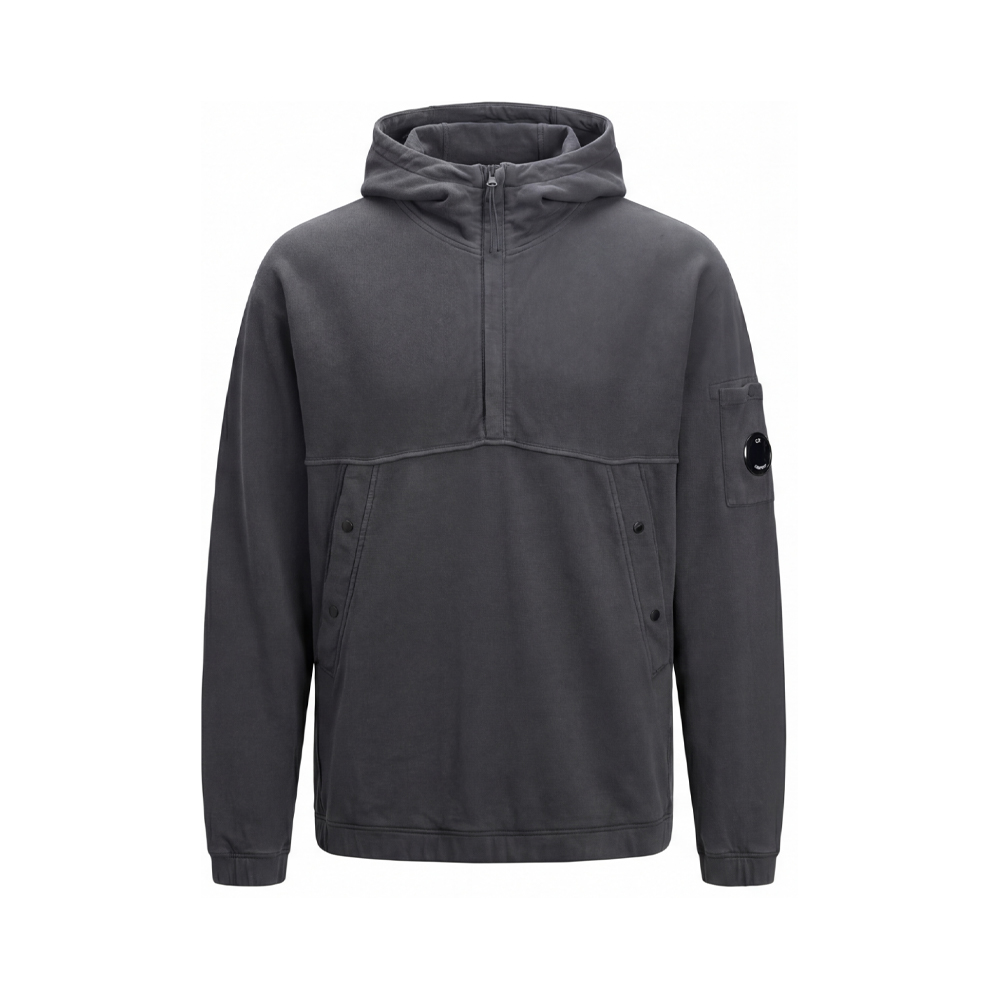 Men's Garment Washing Half Zipper Hoodie ShirtMade for modern man, this half-zip hoodie merges premium sustainable materials, meticulous garment washing, and functional design to redefine casual luxury. The fabric...View Product →
Scale, Automation and What the Numbers Actually Mean
Capacity figures are easy to misread. A manufacturer with more than 1,500 employees running 30 hanger production lines and shipping roughly 16 million knit pieces a year operates at a scale where automation pays for itself. At that volume, an automatic bobbin changer saving four seconds per piece is worth buying. At 50,000 pieces a year, it is not.
What that scale means for a buyer is narrower and more useful. There is enough machine capacity to protect a delivery window when one line goes down, and enough order volume to keep specialist machines busy rather than idle. A factory running multiple shifts across 30 lines can absorb a rush order that would force a smaller supplier to subcontract, and subcontracting is where seam quality usually drifts first.
Dual-country production, with manufacturing in both China and Vietnam, adds a second dimension. Splitting orders across two locations is not the same as having a spare sewing room next door, but it does reduce the risk that a single factory stoppage takes an entire season's delivery with it.
Four Mistakes Buyers Make About Sewing Technology
- Assuming new machines fix a bad pattern. If the pattern's seam allowance is wrong for the fabric's stretch, the best machine in the factory will produce a bad seam slightly faster.
- Equating automation with a lower price. Automated machines raise depreciation and maintenance costs. They only reduce unit cost when changeover time and rework fall as well.
- Treating speed as a quality signal. Running a cover-stitch machine at maximum speed on a light jersey produces skipped stitches and puckering. Optimal speed on knits is often 20 to 30 percent below the machine's ceiling.
- Verifying one category and assuming the rest. A factory that sews excellent fleece hoodies may have almost no experience with bonded seams or four-way stretch activewear.
What Comes Next, and What It Is Worth to You
Machine vision inspection, phone-based parameter setup and voice-guided operation are all moving from demonstration booths into production halls. They are genuinely useful, but their value is narrow. Vision inspection catches skipped stitches and seam deviation as they happen. Phone-based setup shortens the time needed to switch a line from one fabric to another. Voice guidance cuts the training curve for new operators.
None of these will turn a disorganized sewing room into a reliable one. Each of them reduces variance and shortens changeover, which brings the conversation back to the same three things: stitch quality, unit cost, and how quickly the line can change styles. A supplier who can discuss sewing technology in those terms, with numbers attached, is giving you manufacturing information rather than sales copy.
The practical takeaway is to stop evaluating sewing technology as a list of features and start evaluating it as a set of tolerances. Ask what stitch density the factory uses on your specific fabric, what seam strength it guarantees, how many seconds a bobbin change costs, and how long a changeover takes. Those answers are measurable, comparable across suppliers, and far more useful than any machine brochure.